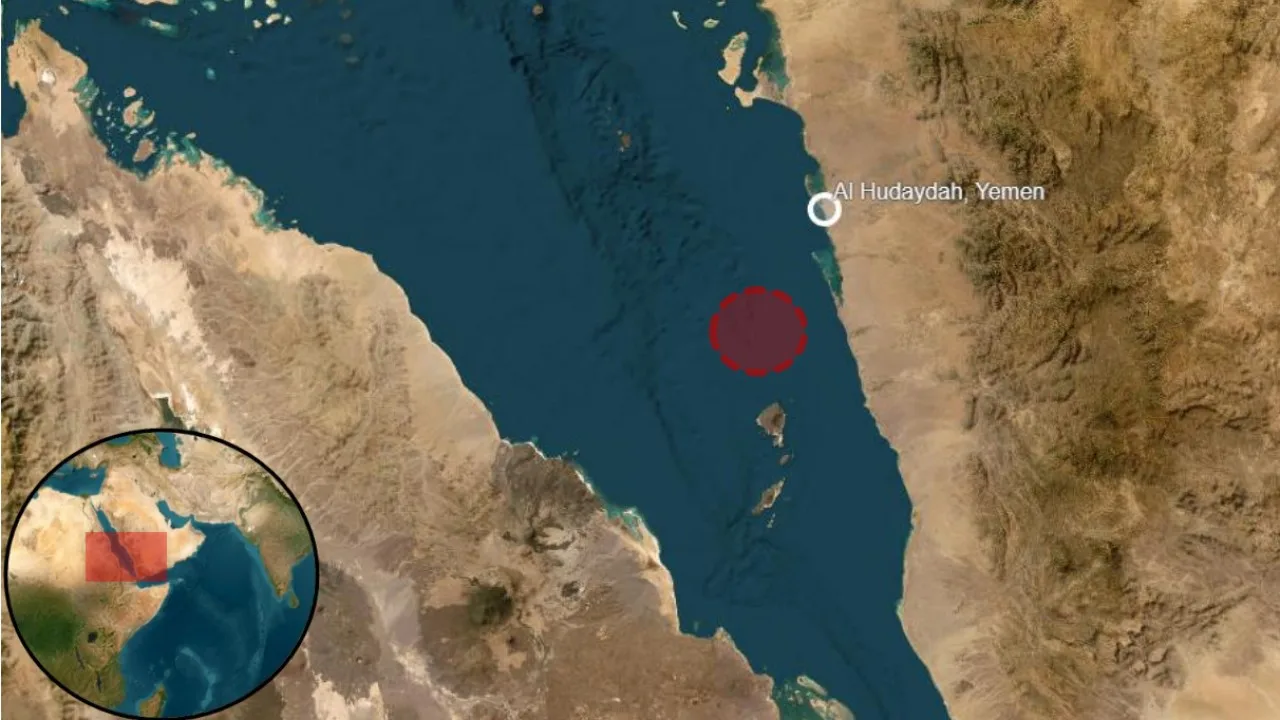
Security concerns in the Red Sea continue to weigh on commercial shipping after another cargo vessel came under attack off the coast of Yemen, underscoring that the region remains highly volatile despite signs of improving traffic through the Strait of Hormuz.
The bulk carrier Lady Naeima issued a distress call on July 5 after being approached by several armed skiffs about 13 nautical miles off Al-Durayhimi, a Houthi-controlled area on Yemen’s western coast. According to maritime security company Vanguard Tech, the small boats closed to within 20 metres of the vessel before opening fire.
The incident comes just days after another attack in the Gulf of Aden, where unauthorised individuals boarded a bulk carrier using ladders. The crew managed to secure themselves inside the vessel’s citadel while the attackers damaged the bridge and nearby compartments before leaving, according to maritime security firm Ambrey.
These incidents reflect a noticeable rise in security threats across both the Red Sea and the Gulf of Aden over the past month. Although seasonal monsoon conditions make operations more difficult for attackers, security experts say the greatest risk remains close to the Yemeni coastline, where small, fast boats can still operate effectively.
The Joint Maritime Information Center (JMIC) currently classifies the threat level as substantial in the Gulf of Aden and moderate along the Bab el-Mandeb and southern Red Sea shipping corridor.
In its latest assessment, JMIC warned that the recent attacks demonstrate that armed groups operating from small boats remain capable of carrying out aggressive close-range assaults against commercial vessels.
The continuing instability has prompted many shipping companies to maintain diversions around the Cape of Good Hope rather than return to the shorter Red Sea route. Most operators remain cautious after the prolonged campaign of attacks launched by Yemen’s Houthi movement against commercial shipping since late 2023, although the group has not claimed responsibility for the latest incidents.
While the Red Sea remains unstable, conditions in the Strait of Hormuz have shown gradual improvement.
According to JMIC, around 70 U.S.-assisted vessel transits were recorded during the 72 hours leading up to July 5. Daily traffic through the strategic waterway reached 33 transits on July 2, 29 on July 3 and 18 on July 4.
Although these figures remain below the peak recorded in late June, they represent a significant recovery from June 13, when no monitored commercial transits were recorded.
Even so, security agencies warn that risks have not disappeared.
JMIC said the overall threat level in the Strait of Hormuz remains substantial, noting that Iran retains both the capability and the intent to carry out hostile actions should tensions escalate again. While the current situation is more stable than before the recent U.S.-Iran memorandum of understanding, authorities continue to advise vessels to remain on heightened alert.
The maritime security body also confirmed that the southern transit lane through the Strait of Hormuz has now been expanded and is available to commercial traffic around the clock. However, it cautioned that a designated mine danger area still overlaps part of the previous traffic separation scheme, requiring ships to navigate the area with particular care.