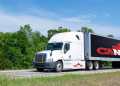





Schneider National delivered stronger-than-expected second-quarter results and increased its earnings outlook for 2026, citing continued improvement in the truckload market as tighter capacity allows carriers to regain pricing power after several years of rising operating costs and weak freight rates.
The company said the current supply-demand imbalance remains favorable for carriers and described the truckload market as being only in the early phases of its rate recovery. Management believes the stronger pricing environment will help offset multiple years of significant cost inflation.
During the quarter, Schneider’s one-way truckload network secured double-digit rate increases on contract renewals. The company also reported a rise in mini-bid activity as more shippers seek to secure transportation capacity ahead of the peak shipping season. At the same time, Schneider increased its spot market exposure, noting that the market conditions in June were similar to those during the peak of the freight cycle in March 2021.
For the second quarter, Schneider reported adjusted earnings of 29 cents a share, beating analysts’ estimates by 6 cents and up 8 cents from the year-ago period. Consolidated revenue reached $1.57 billion, up 10% year over year and above the consensus estimate of $1.52 billion.
Following the stronger performance, the company raised its full-year adjusted earnings guidance to a range of 90 cents to $1.10 per share, representing an 18% increase at the midpoint compared with its previous outlook. Analysts had been expecting adjusted earnings of 96 cents per share for 2026. Schneider reported adjusted earnings of 63 cents per share for the full 2025 fiscal year.
President and CEO Jim Filter said the positive effects of non-compliant capacity leaving the market have materialized faster than originally anticipated, adding that the company expects to continue benefiting from stronger operating leverage.
Schneider’s truckload segment generated $628 million in revenue, a 1% increase from a year earlier. Revenue per truck rose 5%, although the average number of trucks in service declined 4% due largely to a more competitive driver hiring market. The company noted that improved asset utilization has helped offset the impact of operating a smaller fleet.
Within the truckload business, the one-way fleet achieved a 16% year-over-year increase in weekly revenue per truck, while the dedicated fleet recorded a more modest 1% improvement.
Management also acknowledged the loss of a major dedicated customer, which is expected to weigh on third-quarter performance. However, the impact has already been incorporated into the company’s updated financial guidance. During the first half of the year, Schneider secured new dedicated business covering 500 additional trucks. Some of the remaining available equipment may also be reassigned to the one-way fleet to capitalize on favorable spot market conditions.
The truckload division reported an operating ratio of 91.8%, improving by 180 basis points compared with the prior year.
Market indicators continue to support Schneider’s positive outlook. Elevated carrier tender rejection rates suggest truckload capacity remains tight, while national dry van spot rates continue to run significantly above year-ago levels throughout July.
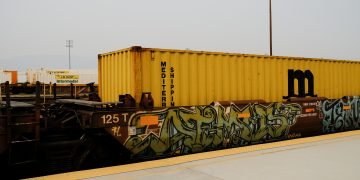
Schneider’s intermodal business generated $262 million in revenue, down 1% year over year. Revenue per shipment slipped 2% as average haul lengths declined. The company said current contract renewals are producing low-single-digit rate increases, while more recent agreements are being signed with mid-single-digit pricing gains. Although recruiting drayage drivers has become increasingly difficult, Schneider said it is not expanding its use of third-party operators simply to pursue additional freight volume.
The intermodal segment posted an operating ratio of 93%, representing a 90-basis-point improvement from the previous year.
The logistics division delivered stronger growth, with revenue increasing 11% year over year to $376 million. The segment achieved an operating ratio of 96.8%, also improving by 90 basis points.
Schneider continued to strengthen its balance sheet during the quarter. Net debt leverage decreased to 0.2x from 0.3x at the end of 2025. The company also decreased planned net capital expenditures for 2026 to a range of $350 million to $400 million, reflecting fewer trailer purchases than previously expected. Net capital expenditures in 2025 were $289 million.
Why it matters Schneider National is one of North America’s largest asset-based transportation providers and a bellwether of freight market conditions. Its better results, improved pricing environment and comments about tightening truckload capacity are an important gauge of the broader recovery taking shape in the truckload and intermodal transportation industries.