



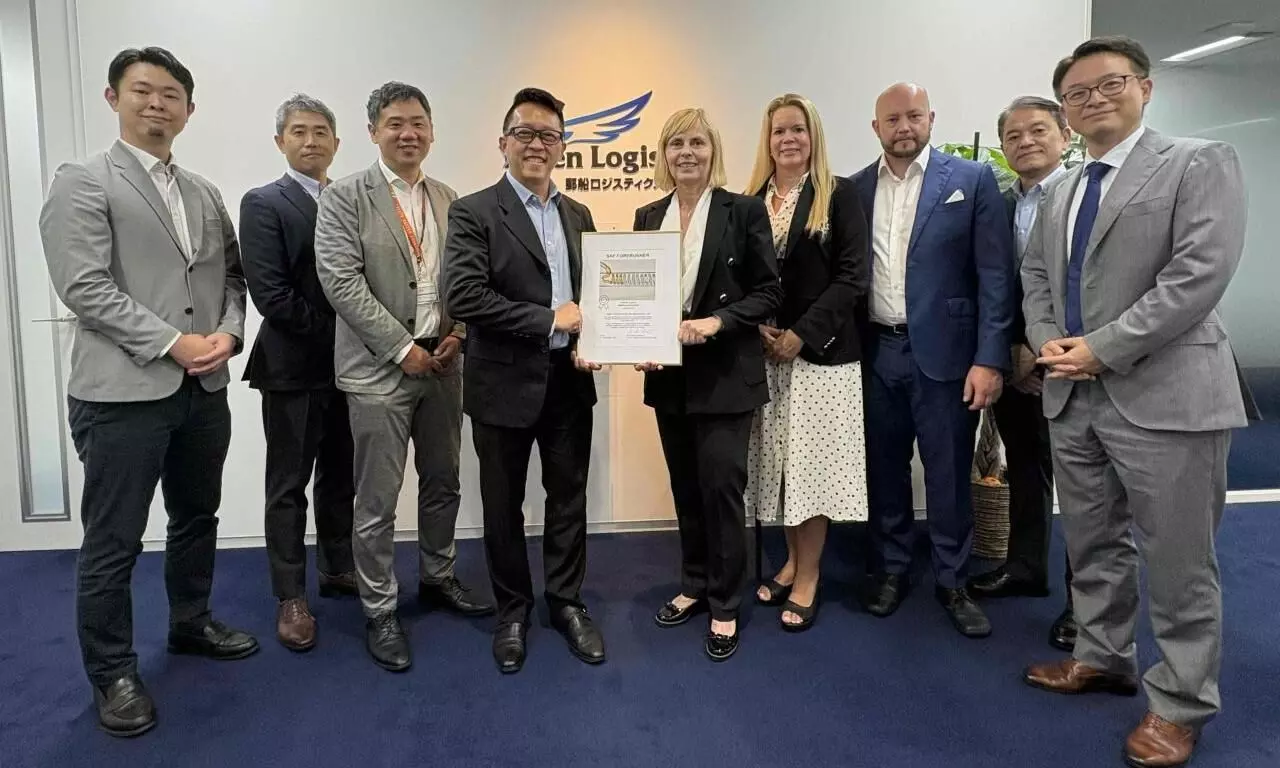
Finnair and Yusen Logistics join forces to increase the use of Sustainable Aviation Fuel (SAF) in air cargo. Yusen Logistics will join SAF purchases to reduce the scope 3 greenhouse gas emissions related to cargo transported on Finnair-operated flights.
The agreement is for an initial term of one year but can be extended. It reflects the common ambition of the two companies to reduce the environmental footprint of air freight and to provide customers with more concrete solutions to offset emissions linked to their supply chains.
For Yusen Logistics this means customers can obtain SAF environmental attributes through a Book-and-Claim mechanism without changing their current air freight services. Through certificates and related reporting, customers will be provided with information on the environmental attributes associated with them, and supported in achieving their own sustainability objectives.
Our customers want more practical solutions for their efforts to reduce the environmental impact of their supply chains. Partnering with Finnair enables us to provide our customers with access to environmental attributes associated with SAF through a Book-and-Claim scheme while preserving the quality of service they have come to expect,” said Eisuke Fukagawa, Head of Air Freight Forwarding Unit, Yusen Logistics Global Management.
Creating long-term demand for SAF
“The agreement is another step for Finnair Cargo in its efforts to increase the use of SAF in air cargo, while helping to strengthen a long-term demand for the fuel.
“We are very pleased to see our customers committing to the use of sustainable aviation fuel (SAF) in the long term. Gabriela Hiitola, Finnair Cargo Senior Vise President, said: “This multi-year agreement with Yusen Logistics is an important milestone in reducing the climate impact of air cargo and a concrete example of how customers and airlines can work together to accelerate the energy transition.”
Continued demand for SAF could help encourage more production and availability of the fuel in the years ahead, Hiitola said. She said other companies should look at how SAF could help reduce the carbon footprint of their air cargo operations.
SAF is one of the potential options to replace the fossil-based aviation fuel in the attempt to reduce the greenhouse gas emissions. SAF has similar CO2 emissions during flight compared to conventional fossil jet fuel, however the larger carbon footprint for the whole life cycle is discussed. The fuel can also be used in existing aircraft and airport infrastructures.
The role of SAF in aviation decarbonization is growing, but SAF production is still limited. In 2025, SAF represented less than 1% of the world’s jet fuel production. SAF made up 1.6% of Finnair’s total fuel consumption in the same period.
Yusen boosts air freight capacity
The SAF agreement is a further step in the development of the air cargo business of both companies.
Yusen Logistics has been investing in its air freight operation including its partnership with cargo.one to modernize pricing, procurement, quoting and booking processes across its global network. The platform now offers real-time rates and service options to more than 100 Yusen Logistics branches.
The company is also investing in its physical cargo infrastructure in Brussels Airport. Yusen Logistics and Air Promotions Agencies are building a new 14,000 square meter logistics facility. The facility is expected to be completed in 2027 and is expected to support Yusen’s continued growth in pharmaceutical logistics.
Finnair Cargo’s position in the region strengthened
At the same time Finnair Cargo has continued to develop its regional network through local sales partnerships.
Prior to launching its first Australia service, the airline signed up with ACP Worldwide as its GSSA in Australia and New Zealand in August 2026. In July Finnair Cargo named 4RCargo as its GSSA for Estonia, Latvia and Lithuania.
Western Associate (WAI), Finnair’s General Sales Agent in Japan, played a role in signing the Finnair-Yusen deal.