



The Airbus A350 Freighter (A350F) programme has reached a series of important milestones as Airbus moves closer to the aircraft’s first flight. Engineering, assembly and flight-test teams are now working in parallel to prepare the freighter for the next phase of its development.
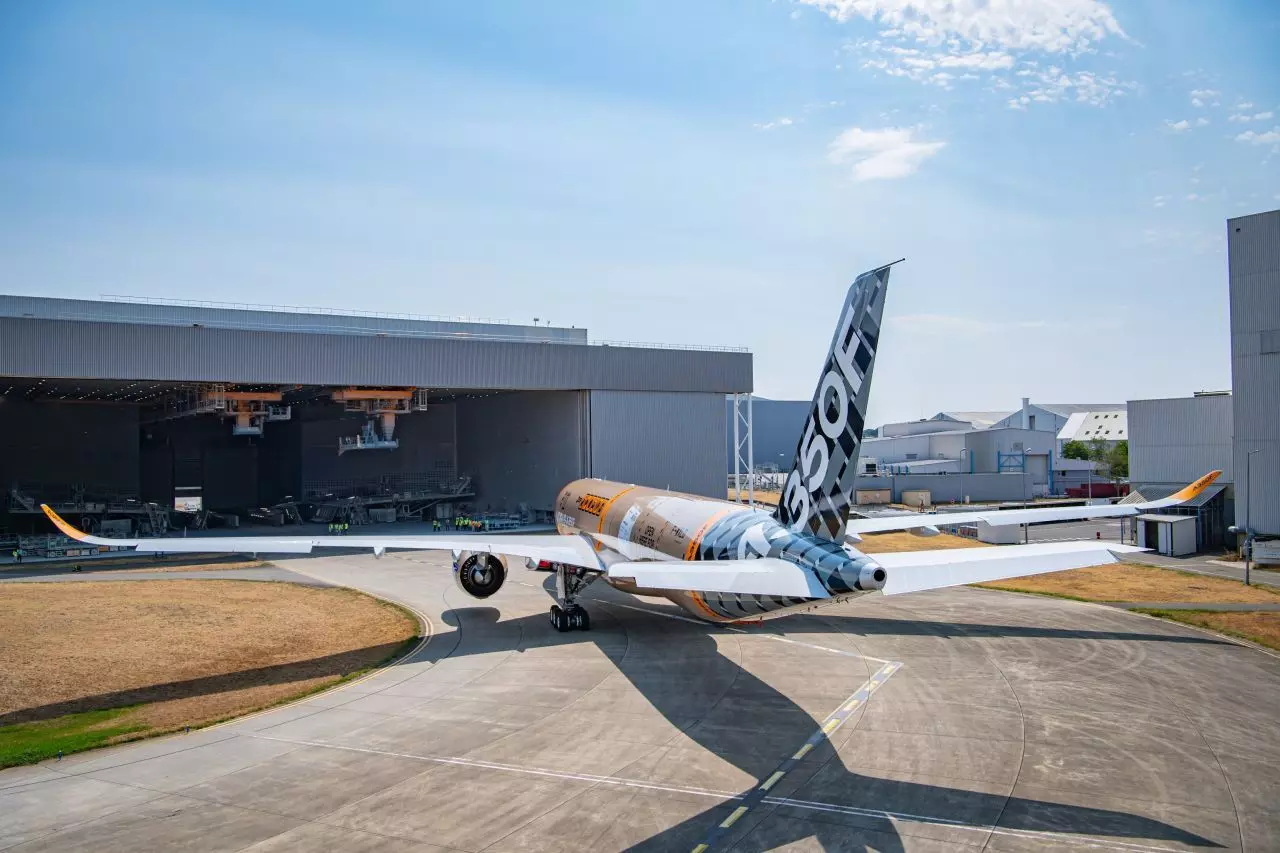
Last month, Airbus revealed the first A350F test aircraft in its distinctive “flying parcel” livery. The design was selected following a worldwide competition that attracted more than 4,000 entries. Airbus ultimately combined two winning concepts: one submitted by John Feehan, a 57-year-old graphic designer from Dublin, and another created by Canadian brothers Quinnten and Ellisten Iversen, aged 16 and 12.
Assembly and ground testing completed
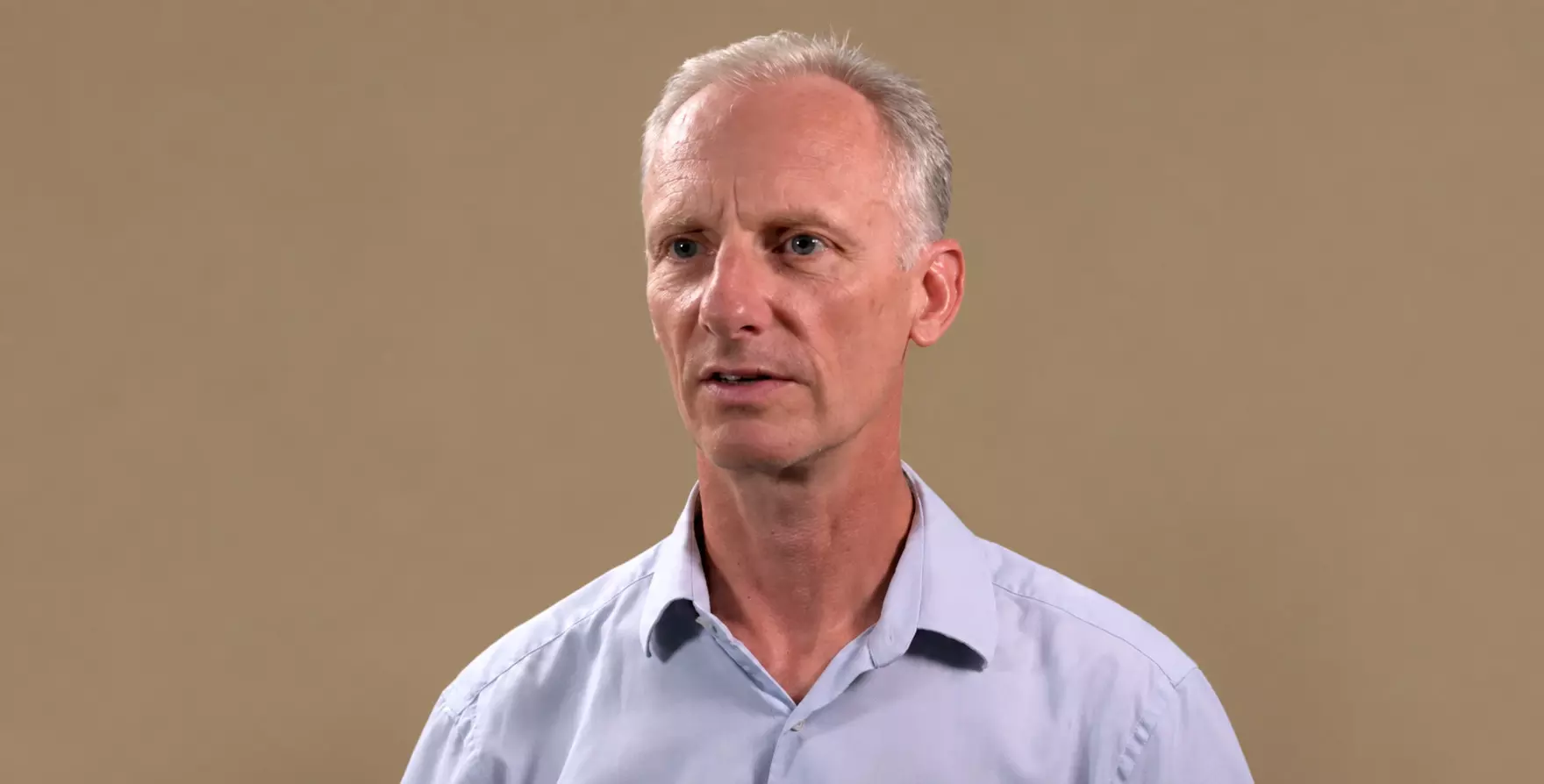
According to Joël Rocker, Chief Engineer for the A350F programme, the first flight-test aircraft has now been transferred to the flight-test community, while the second aircraft is following closely behind.
Critical pre-flight activities on the first aircraft have been completed. These included loading trials involving the cargo loading system, cargo-door closing tests and pressure testing carried out with all equipment and systems installed.
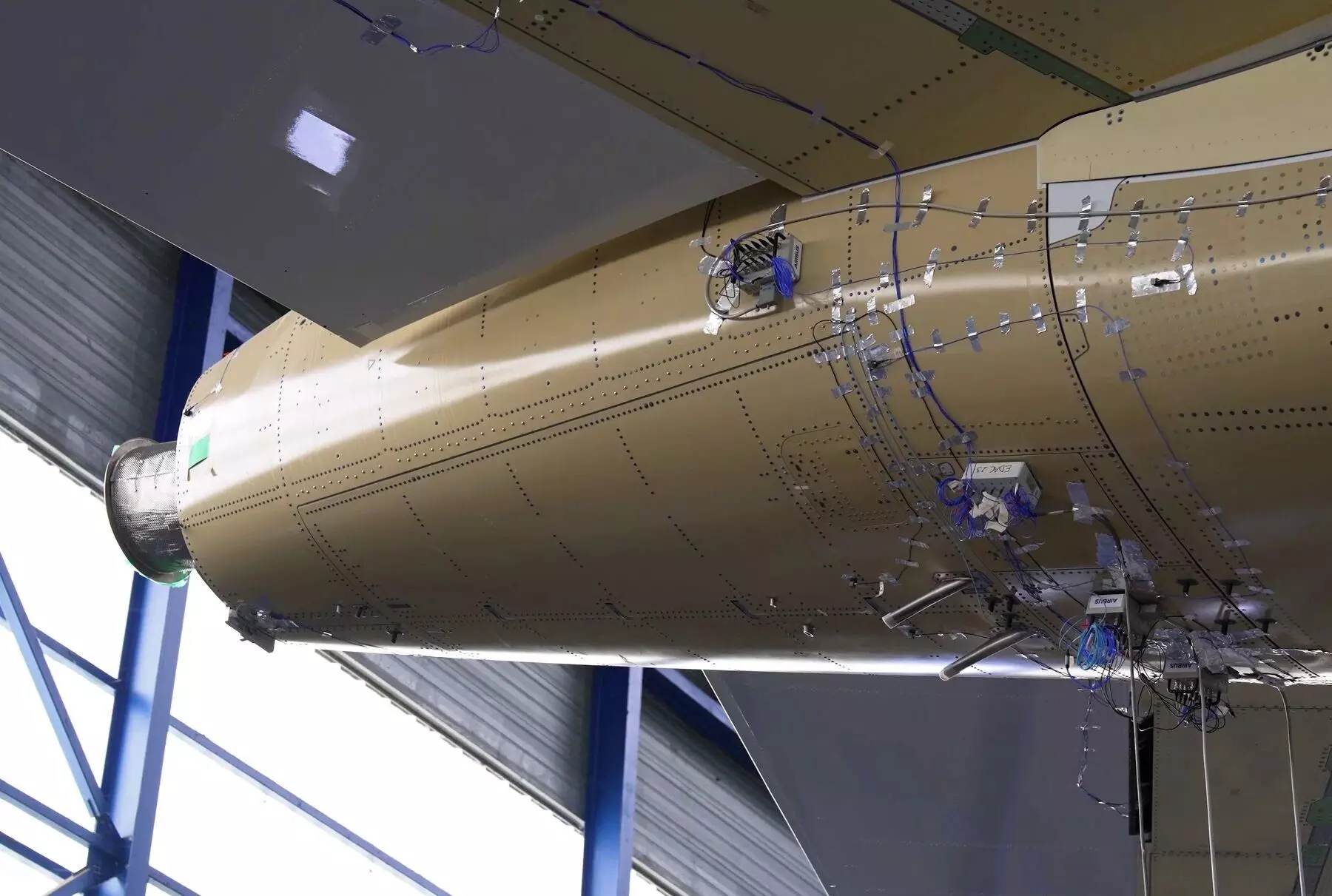
Ground vibration testing was also completed in June. The campaign generated data on the way the airframe responds to mechanical vibrations and contributed to the structural model that will be used during flight testing.
Another preparatory activity involves anemometry testing on MSN59, an A350-1000. A trailing cone positioned behind the aircraft will be used to calibrate its pitot-static system, which measures airspeed, altitude and Mach number, against the aircraft’s internal air-data instruments before the dedicated freighter campaign begins.
Airbus is also validating its fire and smoke detection systems with smoke generators on the ground and in flight. The approach allows the team to assess detection performance and rehearse procedures without creating an actual fire. Such preparation is particularly important for the freighter because a fire or smoke event on the cargo deck can require the hold to be depressurised, potentially forcing the aircraft to descend to 20,000 feet.
Why the A350F requires its own flight-test campaign
Although the A350F is derived from the A350-1000, Airbus stresses that it cannot simply be treated as another version of the passenger aircraft.
Laurent Bussiere, Lead Flight Test Engineer for the A350F programme, explained that the freighter has a unique configuration. Its fuselage effectively combines the forward fuselage of an A350-900 with the rear fuselage of an A350-1000, while retaining the A350-1000 wings.
That combination creates a new aerodynamic model with implications for flight-control behaviour. The aircraft’s different landing-gear geometry also changes how it behaves during ground manoeuvring.
“It’s not an A350-1000 and it’s not an A350-900, but rather it’s between both,” Bussiere said, underlining the need to study the behaviour of the entire system around this unique configuration.
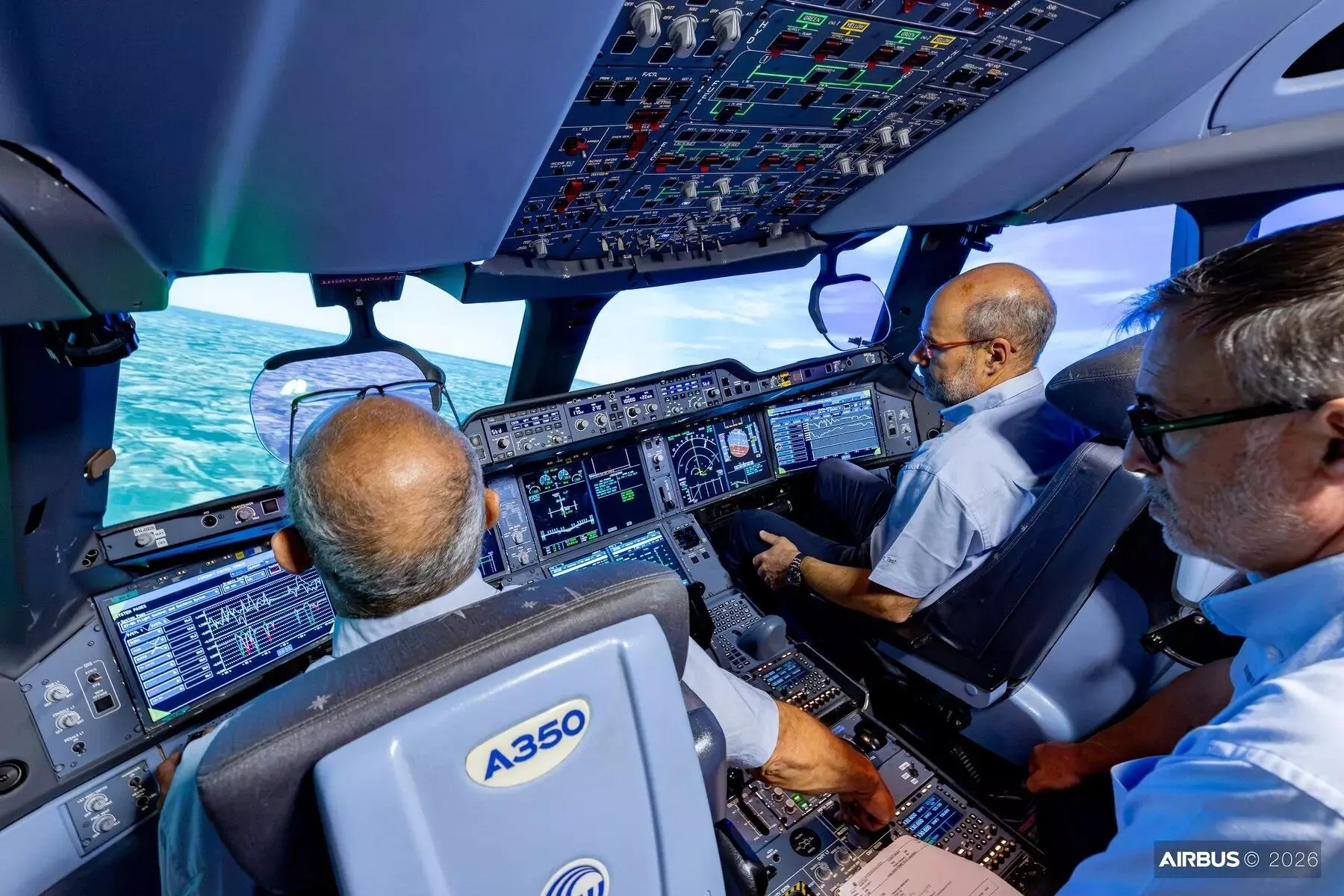
The development simulator therefore plays an important role in preparing the team not only for the first flight but also for the approximately 400 flight hours that will follow during the test campaign.
Around 10% of the derivative aircraft’s aerodynamic characteristics still have to be verified. As a result, the first flight will be conducted entirely in “Direct Law”, the basic manual flight-control mode, rather than “Normal Law”, which incorporates stability and flight-envelope protections.
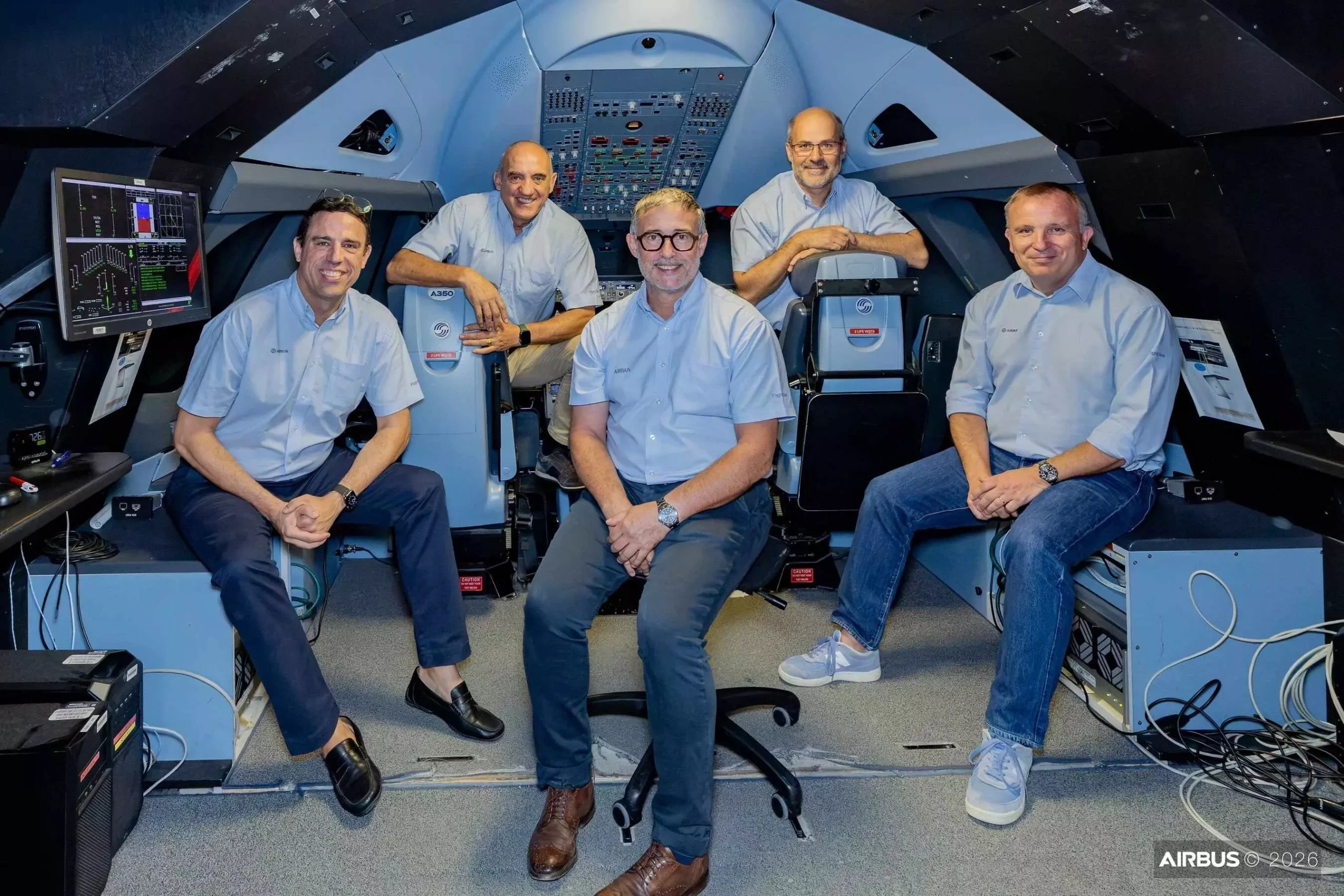
A five-member crew completed a dedicated simulator session in early September. The team comprised two pilots, one Test Flight Engineer and two Flight Test Engineers, with the session focused on rehearsing the flight profile and possible contingency responses.
Virtual First Flight brings the aircraft closer to reality
Before the A350F leaves the runway for the first time, Airbus is exercising the aircraft virtually through its “Virtual First Flight” (VFF) programme.
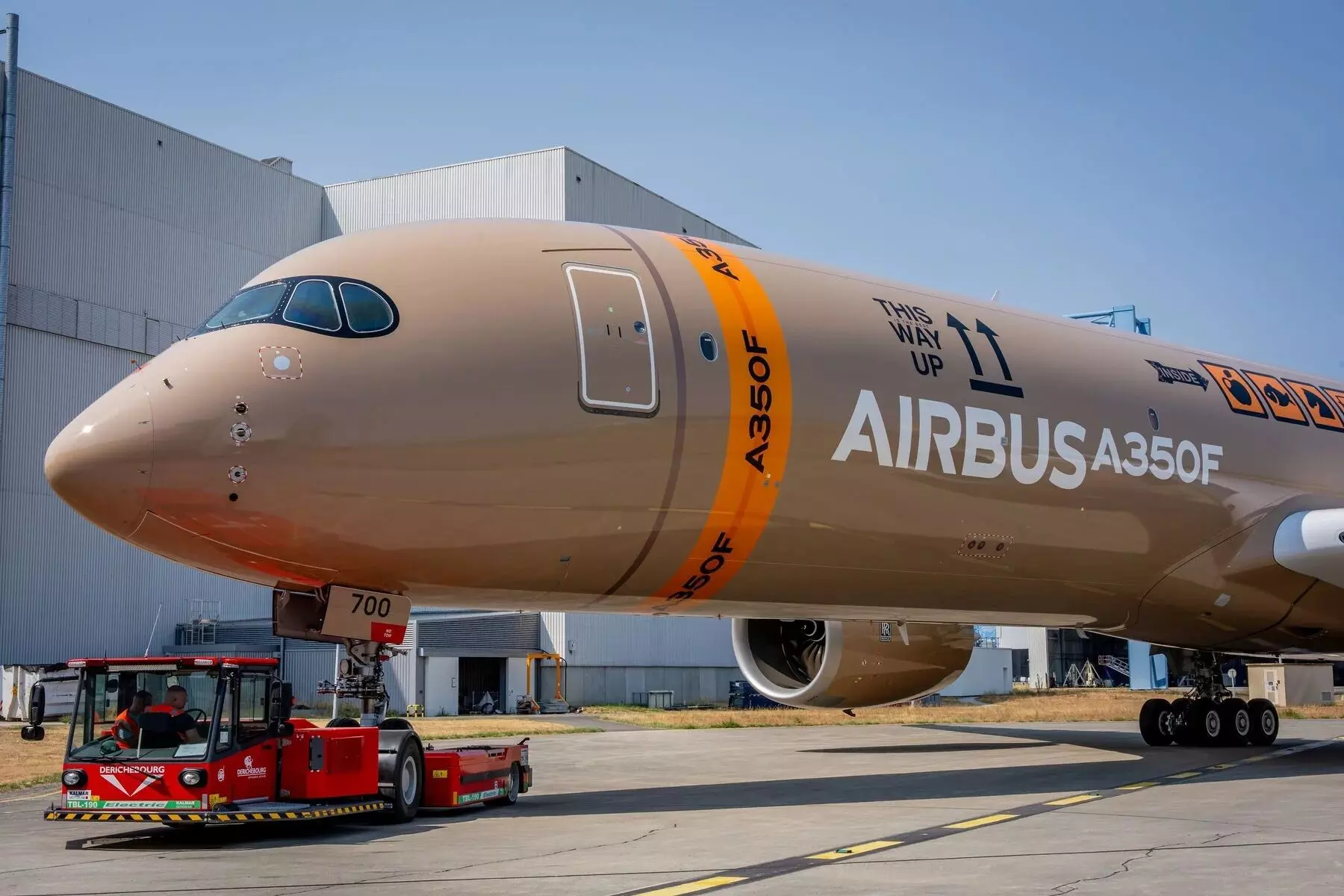
The latest milestone is designed to validate the aircraft’s new systems, clear its flight-control laws, bring together the complete crews assigned to the first two test aircraft, MSN700 and MSN701, and examine aircraft behaviour under specific combinations of system failures.
Bussiere said the failure scenarios allow Airbus to assess the criticality of failures, establish the appropriate crew responses and determine whether procedures inherited from the A350-1000 need to be modified for the freighter.
The VFF programme consists of 13 simulator sessions, each lasting around five hours. They are conducted on a development flight-test simulator connected to real aircraft avionics test benches, including the actual flight-control and digital engine-control systems.
According to Bussiere, the setup is approximately 90% representative of the physical aircraft. The principal element still requiring validation in the sky is the freighter’s specific aerodynamic model.
New instrumentation and EASA involvement
Both MSN700 and MSN701 incorporate a redesigned Flight Test Instrumentation (FTI) station. It has been moved to the forward courier area immediately behind the pilots.
While the software has not changed, Airbus has consolidated the hardware onto a single specialised pallet positioned in the forward lower-deck cargo area. The arrangement preserves as much main-deck cargo space as possible while providing flight-test engineers with large LED displays and a modern, scalable graphical interface.
The European Union Aviation Safety Agency (EASA) is already involved in reviewing and approving the flight-test plan. Its pilots and engineers are expected to fly onboard as witnesses during performance flights, while the agency’s role will become considerably larger during formal certification in 2027.
The certification campaign is expected to last approximately nine months and will use two aircraft with different FTI configurations.
MSN700 will concentrate on aerodynamic performance, handling qualities and autopilot systems. It is fitted with a reinforced tail skid and bumper to support take-off performance testing. This aircraft will clear the flight-control laws first, allowing MSN701 to conduct its first flight in Normal Law.
MSN701, meanwhile, will concentrate on systems testing, including air conditioning and extensive fire and smoke trials. Those tests will ultimately enable MSN700 to operate with real cargo. MSN701 will also carry out the hot-and-cold weather testing campaign.
Because cargo is the aircraft’s core purpose, Airbus is seeking operational maturity from the earliest stages of the programme. The goal is to load and unload representative containers and payloads every day after flights. Some of the trials will also involve operators using their own unit load devices (ULDs) and pallets to verify compatibility with their specific loading procedures.
Designed with operators at the centre
Rocker described the A350F as “a true new generation freighter”, developed through close cooperation with airline operators.
Approximately 100 features recommended by operators have been incorporated into the design. Among them is a cargo floor engineered to support higher running loads than competing freighters, giving the aircraft additional capacity and operational flexibility.
The floor is also watertight. This means it can be washed down directly while reducing the risk of corrosion caused by water penetrating into the structure underneath.
For specialised cargo, the A350F combines those higher floor loads with a powerful cargo-loading system equipped with 116 powered drive units across the main deck. The system is intended to handle heavy or irregular loads regardless of ground-level conditions, floor humidity or pallet flex.
The freighter also features what Airbus describes as the industry’s largest cargo door. Its dimensions allow oversized cargo, including large aircraft engines, to enter through a single loading point. The system can also support the hovering of goods on pallets, which Rocker described as a new capability for the market.
Airbus targets lower operating costs
Operating-cost efficiency has been a major consideration throughout the A350F design process.
Rocker said the aircraft uses 70% advanced materials, including 50% composite materials as well as titanium components. The material mix is designed to reduce maintenance requirements and sensitivity to corrosion.
The aircraft’s lightweight structure, advanced aerodynamics and new-generation engine technology are also intended to reduce fuel consumption and operating costs. Airbus says fuel burn could be up to 40% lower than that of comparable freighters.
System reliability is another part of the programme’s operating-cost proposition. Rocker pointed to the wider A350 family’s fleet-wide operational reliability, which he said has been demonstrated at more than 99.35%.
With reduced fuel consumption and the industry’s largest cargo door, the A350F is also on track to become the first freighter to comply with the latest ICAO CO₂ standards.
Rocker ultimately described the aircraft as “a truly new 21st century generation freighter”, bringing together lessons gathered from operators around the world with Airbus’s engineering expertise. The objective is to establish the A350F as the next-generation benchmark for the global freighter market.