



Recently, I had the opportunity to attend the Canadian Association of Women in Construction (CAWIC) Annual Conference in Calgary, an event that placed transformation and inclusion firmly at the centre of discussions about the future of Canada’s construction industry.
This year’s theme, Tools for Transformation, explored the ideas, resources, connections and leadership needed to drive meaningful change across the sector.
One of my strongest takeaways was that transformation can begin with something remarkably straightforward: listening to people and understanding what they actually need to perform their jobs safely and effectively.
That principle is particularly important in construction because the industry cannot afford to overlook the experiences of any section of its workforce. Construction continues to face a significant skills shortage and must attract and retain workers from a broad and diverse talent pool.
At CIOB, we firmly believe that creating a working environment where people have the right equipment, feel that their needs are being considered and can carry out their roles safely is an important part of that effort.
For us, the issue is not simply about offering workers more choice in workwear. It is about building an industry where people can develop long-term careers while ensuring that practical barriers that may leave someone feeling excluded are taken seriously.
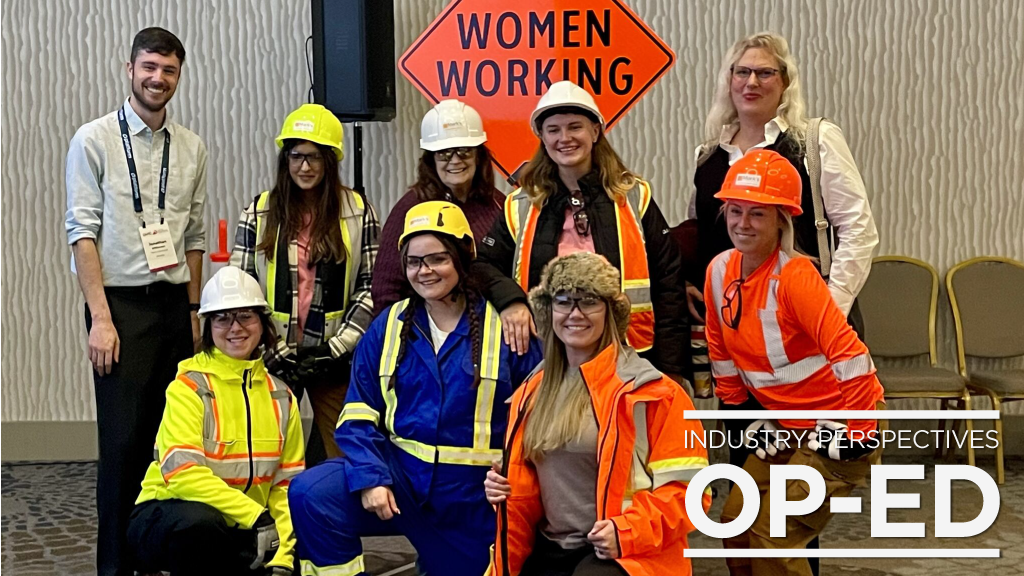
That message came through particularly clearly during the Mark’s Commercial PPE Showcase and Fashion Show.
For years, women have frequently had to use PPE originally designed around men and subsequently adapted by simply producing smaller versions. But smaller does not automatically mean better fitting.
The showcase made those challenges tangible. We saw workwear developed around some of the practical difficulties women can encounter in industrial environments, including coveralls featuring designs intended to make the use of portable toilets easier.
The event also highlighted another reality of modern construction work: jobs are not always confined to one environment.
Faye Elford, a project manager, modelled an outfit designed to move seamlessly from meetings and project reviews to a construction site. The look combined everyday workwear with appropriate PPE and safety footwear.
That reflects the reality faced by many professionals across the industry. A worker may spend part of the day in an office before being required to walk through a jobsite and still need appropriate protection and practical clothing throughout.
At 5’2″, I am accustomed to clothing being too long or simply not proportioned for my height, so I was not especially surprised when the outfit selected for my first fitting did not fit correctly.
What stood out was how Jonathan Williamson and the team responded. Rather than accepting that the available option was simply the best that could be done, they worked with me to identify an alternative.
I ultimately wore a women’s high-visibility safety vest with work trousers available in different leg lengths. Offering short, regular and long options may appear to be a relatively small consideration, but it can make a substantial difference to the person wearing the equipment.
The event also demonstrated how technology and innovation are increasingly becoming part of the wider safety conversation.
Among the examples presented were workwear designed to improve visibility in low-light conditions, heated clothing intended for colder environments and safety footwear developed with winter conditions in mind.
Perhaps most importantly, the showcase demonstrated that there is no single definition of inclusive PPE.
For one worker, inclusion may mean finding trousers that are the correct length.
For someone else, it could mean having gloves that fit properly, workwear that allows them to move between an office and a jobsite, or coveralls designed around the practical realities of women’s working lives.
These considerations can easily be dismissed as minor details, particularly while the construction industry is confronting major challenges relating to safety, skills and productivity.
Yet if the sector genuinely wants to attract and retain a more diverse workforce, it must also pay attention to the everyday experiences of the people it is asking to join and remain in the industry.
Providing PPE that fits properly is a relatively simple step, but it communicates something important: whether workers’ individual needs are genuinely being considered.
That is also at the heart of CIOB’s #PPEThatFits campaign, which was first launched in 2023.
The campaign focuses on the importance of properly fitting PPE and the need for the construction industry to recognise that a one-size-fits-all approach will not work for everyone.
Its impact was recognised this year when #PPEThatFits was named Best Lobbying Campaign at the UK Memcom Awards, following its efforts to raise awareness of the issue and help drive change across the industry.
The discussion, however, is not simply about producing different colours or making smaller versions of products that already exist.
It is about understanding how equipment needs to function for the person who is actually using it.
For me, that was one of the clearest examples of the Tools for Transformation theme at this year’s CAWIC conference.
Meaningful change does not always depend on a major new initiative. Sometimes it begins with a worker saying that something does not work for them. Instead of expecting that person to simply put up with it, the better response is to understand the problem, identify the reason behind it and look for a more effective solution.
The PPE showcase was undoubtedly one of the more enjoyable elements of the conference, but it also reinforced a serious point.
If construction is truly committed to becoming a safer and more inclusive industry, then the equipment it provides must reflect the people who are actually carrying out the work.
PPE should fit the worker, rather than forcing the worker to adapt to equipment that was never designed with them in mind.