



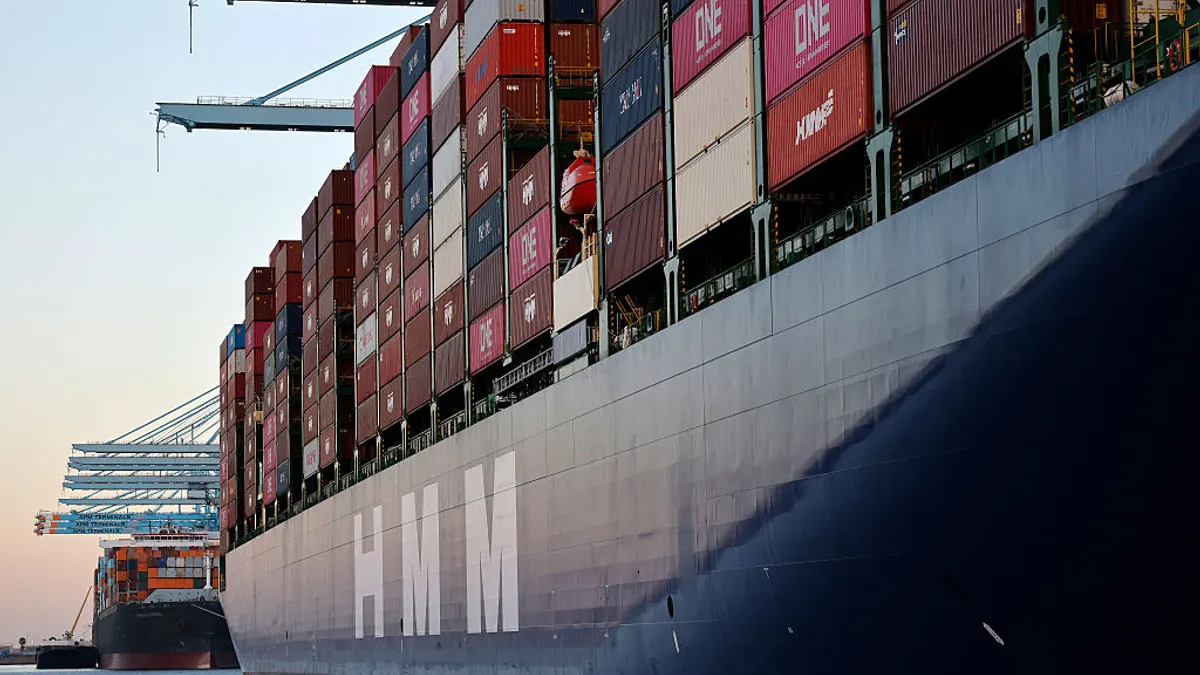
A handful of shipper groups and trade organizations are calling on U.S. Trade Representative Jamieson Greer to extend the current suspension of Section 301 vessel fees directed at China-related ships.
The request was made in a Sept. 23 letter to the U.S. Trade Representative from a coalition that included the National Retail Federation (NRF), the Retail Industry Leaders Association and the Agriculture Transportation Coalition, among others.
The dispute concerns vessel fees, which are part of a broader U.S. effort to change the country’s place in global ocean shipping.
Last year, the USTR announced that it would levy fees ranging from $18 per net ton to $120 per container on a number of China-linked vessels calling at U.S. ports, with the amounts to be increased each April thereafter. There were some exemptions, but the measures were meant to apply to ships built in China or owned or operated by entities associated with the country.
The fees had been slated to start in October 2025. The current pause is set to end Nov. 9, 2026. Implementation was paused Nov. 10, 2025.
Industry’s fear of shipping costs
The vessel fees came after a yearlong Section 301 investigation into China’s role in the logistics, maritime and shipbuilding industries.
The industry reaction to the policy when it was introduced was mixed. Some shipping and maritime leaders supported the measures, but other stakeholders warned that the extra fees could raise the cost of transportation and eventually put upward pressure on consumer prices.
Previously, the American Association of Port Authorities has warned that the fees could decrease the amount of cargo passing through U.S. trade gateways.
The National Retail Federation also said tariffs on cranes and other gear used to handle cargo could undercut the administration’s broader goals.
One year on, ocean freight markets are still grappling with high transportation costs and shifts in carrier capacity, and industry groups are again voicing concerns over the possible impact of the fees.
The coalition’s letter also pointed to equipment availability problems for shippers, congestion across the port and inland transportation networks, and widespread uncertainty affecting global trade lanes.
“Imposing new or resumed fees on China-built or China-linked vessels would have immediate and far-reaching consequences for U.S. companies that rely on ocean transportation to move goods into and out of the United States,” the stakeholders wrote to Greer.
Manufacturing and agriculture also under the spotlight
Groups say that extending the suspension could offer more stability for US agricultural producers and manufacturers by helping them maintain cost-effective access to international markets.
A protracted lull, they said, also could reduce the chances of retaliation and help maintain the competitiveness of U.S.-origin products in foreign markets.
The coalition’s call comes ahead of a planned meeting between President Donald Trump and Chinese President Xi Jinping in Washington, D.C.
The The outcome of that meeting, and the question of whether to extend the vessel-fee suspension beyond Nov. 9, could have implications for U.S. importers, exporters, carriers and other ocean freight market participants.