




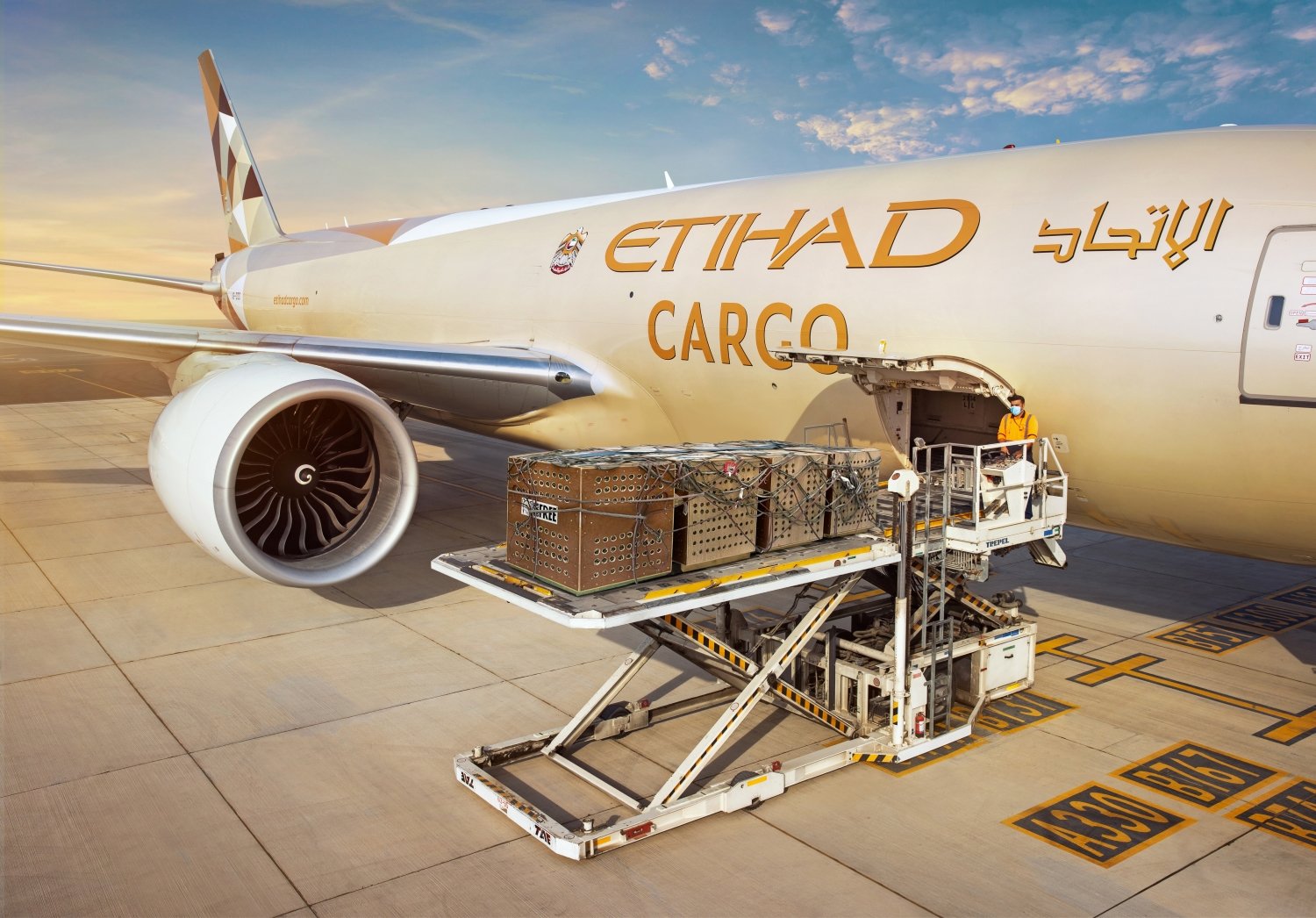
Etihad Cargo has restored its daily Boeing 787-10 passenger service to Shanghai, effective 1 October, bringing additional capacity to one of its key Asian gateways as international supply chains prepare for the seasonal surge in freight demand. The reinstated flights reinforce the carrier’s bellyhold operations and return planned capacity to the market rather than introduce a temporary peak-season expansion.
The resumed service operates alongside Etihad’s existing schedule of seven weekly Boeing 777 freighter flights from Shanghai, one of China’s major commercial hubs. Together, the passenger aircraft and dedicated freighters provide approximately 840 tonnes of cargo capacity per week. The expanded offering gives freight forwarders, logistics providers and corporate shippers greater flexibility in scheduling, more frequent departures and improved connectivity to international destinations.
Stanislas Brun, Chief Cargo Officer at Etihad Cargo, said the timing coincides with the traditionally busy fourth-quarter shipping period, when demand across several major freight segments tends to strengthen. However, he stressed that the move primarily reflects the planned restoration of the airline’s network capacity.
“We are pleased to have this capacity back in the market at an important time for our customers, when demand across e-commerce, high-tech and other key cargo segments is traditionally strong,” Brun explained. He added that the additional space would help the carrier accommodate seasonal volumes while retaining the flexibility needed to serve its wider portfolio of core cargo sectors.
The increase comes at a particularly important moment for global logistics operations. As international trade activity intensifies, direct-to-consumer e-commerce shipments and consumer technology products account for significant freight flows. At the same time, pharmaceuticals, life sciences products and high-value industrial equipment depend on reliable transport solutions, including temperature-controlled handling and time-sensitive bellyhold capacity.
From Shanghai, shipments will move through Etihad Cargo’s central hub in Abu Dhabi, where freight can connect with the airline’s broader international network. The hub’s strategic position in the Middle East enables onward distribution to key markets across Europe, the Middle East, Africa and the Americas, extending the reach of cargo departing from eastern China.
Brun also underlined Shanghai’s importance within the carrier’s wider Asia-Pacific strategy. Etihad Cargo concentrates much of its freighter capacity on major Asian markets, including China, India and Vietnam. Freight from these origins connects through Abu Dhabi before being distributed across the airline’s global network, with Europe, the Middle East and Africa among its principal downstream markets.
Beyond the Shanghai restoration, Etihad Cargo intends to progressively increase both passenger bellyhold capacity and freighter operations over the coming months. The planned expansion is designed to respond to rising international trade demand while giving supply chain partners access to more tailored cargo solutions, greater operational flexibility and stronger connectivity between global markets.
Related articles about Shanghai flights

Etihad Airways and Swissport Deepen Global Partnership as Airport Coverage ExpandsSeptember 16, 2026

Etihad Cargo airlifts more than 120 tonnes of relief aid to landslide-hit NepalSeptember 3, 2026

Etihad Cargo appoints AVIAREPS as GSA in UzbekistanAugust 24, 2026

Challenge Group Expands Global Reach with New Direct Freighter Services to Mumbai and ShanghaiJune 17, 2026

Typhoon Ragasa Freezes Hong Kong: Hundreds of Flights Grounded, Cargo DivertedOctober 3, 2025