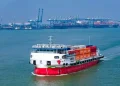




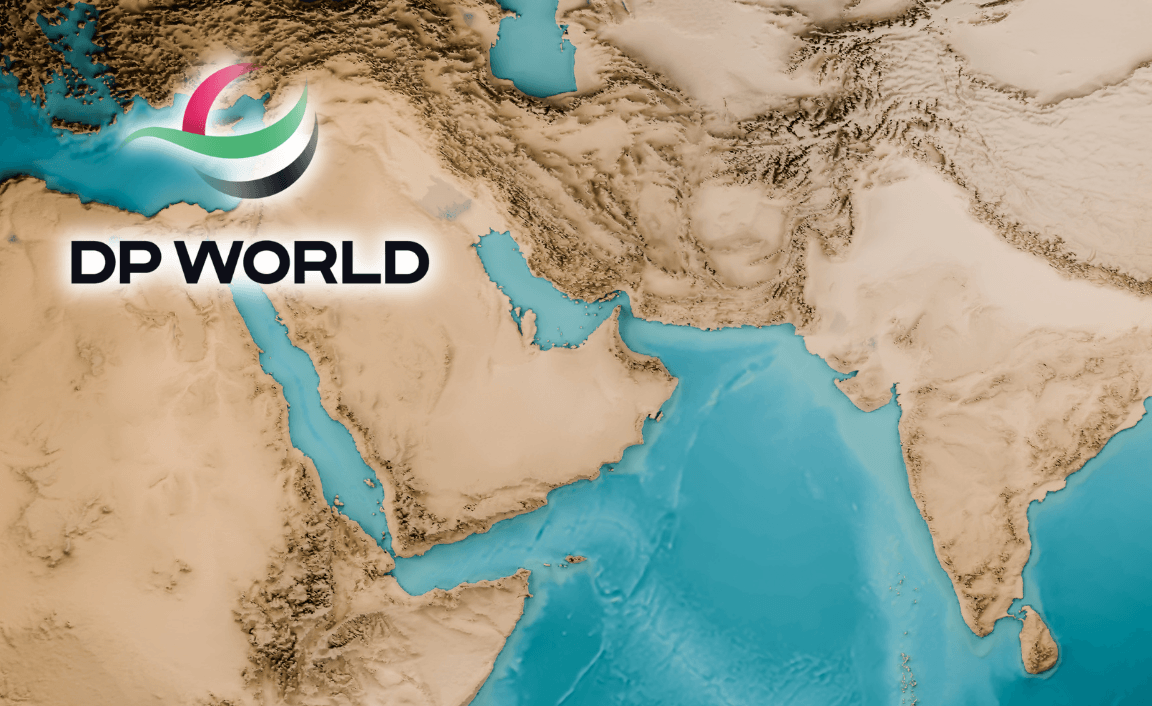
The escalating conflict in the Middle East is reshaping the deployment strategies of the world’s three largest feeder operators, with Global Feeder Shipping (GFS) increasing its capacity while X-Press Feeders and DP World’s Shipping Solutions (SS) reduce their exposure to the region.
GFS had expanded its deployed capacity by nearly 31% over the past year. However, the deteriorating security situation has also affected the carrier, which is 81% owned by AD Ports Group. Two of its vessels, the 4,350 teu GFS Giselle and the 2,824 teu GFS Pride, were reportedly damaged on the previous day. The GFS Pride subsequently sank, while the GFS Giselle sustained minor damage. All crew members aboard both vessels were reported safe.
The incidents highlight the rapidly changing operating conditions facing shipping companies in the Strait of Hormuz, where security developments since late February have significantly affected maritime activity.
X-Press Feeders remains on top even with capacity reductions
X-Press Feeders is still the world’s largest feeder operator by deployed capacity, according to Alphaliner’s survey as of 21 September. But its fleet has fallen 7.1% year on year as the fallout from the Middle East conflict has led the company to cut services across the region.
These withdrawals explain much of the fall in its operating capacity, down almost 14,000 teu to 182,776 teu.
DP World’s Shipping Solutions has also cut its deployed capacity, but the reduction has been more modest at 2.5%. Total capacity dropped to 147,807 teu.
Meanwhile, GFS had increased its fleet to 55 vessels before the latest incidents, reaching 145,116 teu. With this expansion the company got much closer to SS, bringing the capacity gap between the two operators down to about 2,700 teu.
SS has 85 ships, down from 94 in 2025. However, the average size of ships has grown from 1,613 teu to 1,739 teu, showing a shift toward bigger vessels, despite the decrease in fleet size.
Strait of Hormuz exposure puts GFS operations under pressure
The GFS Pride was the sole vessel assigned to the company’s fortnightly KFK service, which operates a shuttle linking Khalifa, Jebel Ali and Karachi, Pakistan.
The route requires vessels to pass through the Strait of Hormuz, where Iran’s Islamic Revolutionary Guard Corps reportedly said it had struck a mine. The vessel’s loss underscores the operational risks facing feeder operators whose regional networks depend on access to this strategic waterway.
Despite these challenges, the Middle East and the Indian Subcontinent remain GFS’s principal markets. Alphaliner noted that these regions accounted for the bulk of the company’s capacity growth.
Part of that expansion has taken place in the Red Sea, another area of heightened geopolitical tension. However, major container shipping companies have increasingly been returning to the shorter Suez Canal route, seeking to restore more direct connections between Asia and Europe.
X-Press Feeders redirects capacity towards Europe and Latin America
Both X-Press Feeders and SS have reduced their presence in the Arabian Gulf. X-Press Feeders has responded by reallocating tonnage towards Latin American and European trades, while cutting services connecting the Middle East with the Indian Subcontinent.
The changes have involved the redeployment of approximately 38,000 teu from Middle East–Indian Subcontinent services.
X-Press Feeders has strengthened its Subcontinent–Far East loop and added another 2,900 teu to its intra-European operations. In Latin America, approximately 5,100 teu has been redeployed.
The company has also expanded its regional network through new and revised services. Its recently launched North Colombia–Panama service, known as NCX, added 2,600 teu to its deployed capacity.
In addition, X-Press Feeders became the sole operator of the Caribbean Feeder Service (TGX). The service now operates with three vessels, compared with the single vessel contributed by the company a year earlier, adding a further 2,600 teu.
These adjustments reflect a broader effort to compensate for reduced exposure to the Middle East by strengthening operations in other markets.
DP World adjusts its network while maintaining capacity elsewhere
Shipping Solutions has also withdrawn from the Middle East–Indian Subcontinent trade, removing a total of 7,500 teu of capacity. According to Alphaliner, however, the deployment of its vessels across other regions has remained broadly stable.
Part of the capacity reduction in the Middle East has been offset by redeploying tonnage to the Southeast Asia–Western India loop and upgrading vessels on other services.
One example is the China–India Express 2 service, where the 8,540 teu DP World Kochi replaced a smaller vessel with a capacity of 4,872 teu.
The move illustrates how SS is adjusting the composition of its fleet and the capacity available on individual routes, even as it reduces its overall exposure to the conflict-affected region.
Maersk and Hapag-Lloyd prepare to relaunch FM1 service
While regional feeder operators continue to adapt their networks, Maersk and Hapag-Lloyd have announced the relaunch of their FM1 service, restoring a connection between Qingdao in northern China and Khor Fakkan in the United Arab Emirates, near the entrance to the Strait of Hormuz.
The service will call at Ningbo and Tanjung Pelepas before reaching Khor Fakkan, with the return eastbound leg routed through Singapore.
The first vessel scheduled to operate the relaunched service is the 8,440 teu Maersk Athabasca, which is due to depart Qingdao on 17 October.
The relaunch comes as shipping companies continue to reassess their networks in response to security developments, balancing the need to maintain regional connectivity against the risks associated with operating near the Strait of Hormuz.
Together, the capacity reductions by X-Press Feeders and Shipping Solutions, GFS’s rapid expansion and the planned return of the FM1 service illustrate the contrasting strategies emerging across the container shipping sector as the Middle East conflict continues to reshape regional maritime operations.