



The US Federal Maritime Commission (FMC) is proposing a $200,000 fee for each voyage made by Spanish-flagged vessels calling at US ports. The measure follows an investigation into Spain’s refusal to grant port access to certain US-flagged ships, a situation the agency says has created unfavourable conditions for American foreign trade.
In a press release issued on 14 October, the FMC warned that restrictions on US vessels could undermine the efficiency and reliability of international ocean shipping supply chains. The agency also highlighted the potential consequences for the development of US exports, the expansion of a US-flagged liner fleet capable of meeting national security requirements, and the long-term strength of the American merchant marine.
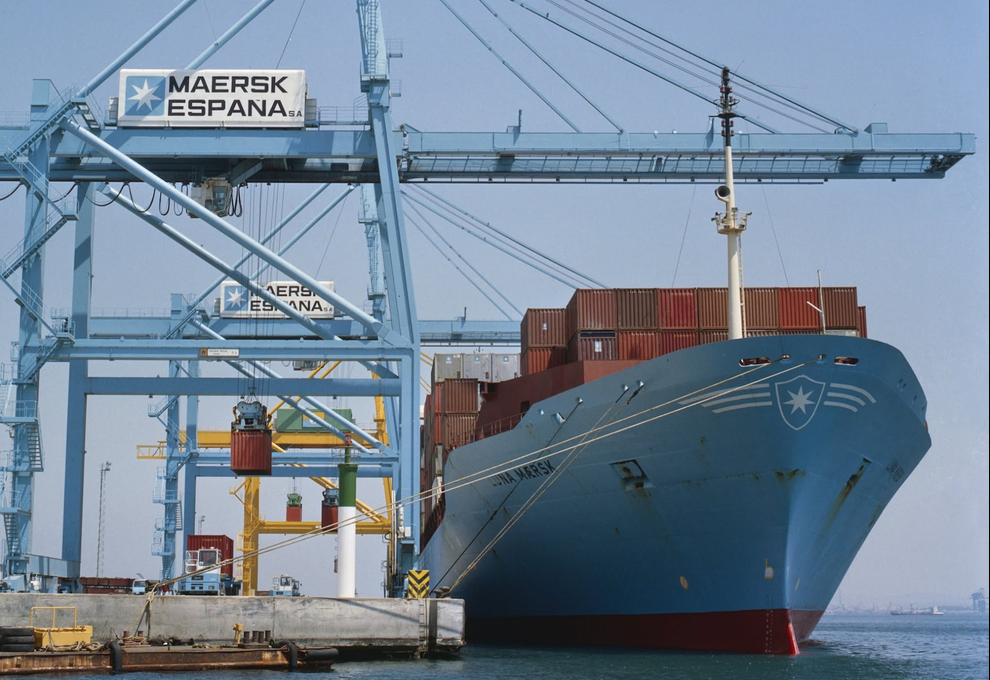
The investigation began in December 2024 after reports that Spanish authorities had denied port access to the Maersk Denver and the Maersk Seletar. Both vessels were transporting cargo under the US Maritime Administration’s Maritime Security Program (MSP).
The programme maintains a fleet of commercially active merchant vessels considered useful for military purposes. These ships are available to support US sealift requirements during conflicts or national emergencies.
Reports published in 2024 indicated that Spain had refused the vessels access because their cargo was destined for or originated from Israel.
However, the FMC has explicitly excluded Spain’s position on Israel from the scope of its investigation. In a notice of proposed rulemaking (NPRM) published in the Federal Register on 14 October, the commission stressed that the inquiry is concerned with the reliability and efficiency of the US ocean shipping supply chain, specifically whether Spain is denying docking privileges to certain vessels and how those decisions affect American foreign trade.
The agency made this distinction despite reports connecting the ships to military support for Israel and the numerous comments received during the investigation. More than 8,000 submissions referred to Spain’s policies and position regarding Israel, but the FMC stated that these issues do not form part of its inquiry.
Spain, in its submissions, argued that it must comply with Spanish, European Union and international laws requiring it to prevent the transit of defence and dual-use goods through its ports. Spanish authorities also maintained that these rules are applied without discrimination.
The FMC rejected the argument as a defence against its investigation, explaining that Spain’s assertion of non-discriminatory enforcement, regardless of a vessel’s flag, does not resolve the question of whether its measures have created unfavourable conditions for US foreign trade.
The proposed $200,000 charge also draws on an earlier precedent involving Japanese shipping companies. According to the FMC, the amount is based on an inflation-adjusted equivalent of a $100,000 per-voyage fee imposed on Japanese carriers following an investigation in 1997.
The commission acknowledged that the circumstances differ. At the time, numerous Japanese carriers and Japanese-flagged vessels regularly called at US ports, whereas comparatively few Spanish-flagged vessels serve American ports today. Nevertheless, the FMC said it was proposing similar remedies to those that helped bring about a bilateral resolution in the Japanese case.
Beyond the proposed voyage fees, the commission is considering restrictions on certain Spanish products entering the US market. Potentially affected categories include perfumery and cosmetics, oils and fats, ceramics, articles made of stone, sugar and confectionery.
The FMC opened a 60-day public comment period on 15 October, inviting interested parties to submit their views on the proposed measures. The consultation is intended to gather feedback before the commission determines how to proceed with its proposed actions.