



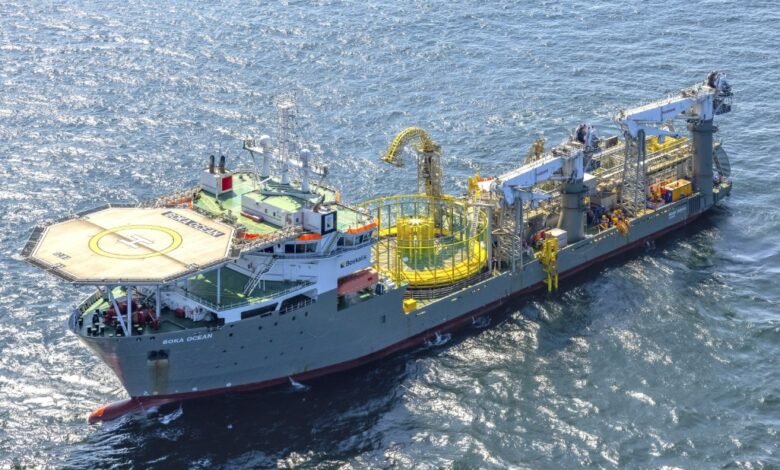
Boskalis is preparing for the next wave of offshore energy projects with the order of a brand-new high-capacity cable laying vessel, strengthening its position in one of the fastest-growing segments of the maritime industry.
The Dutch marine services and dredging group said the new cable laying vessel (CLV) is being developed to meet rising demand for large offshore power infrastructure projects, especially in the interconnector and offshore wind sectors where long-distance high-voltage direct current (HVDC) cables are becoming increasingly essential.
The vessel is scheduled to enter service in 2029.
Designed for large-scale offshore operations, the future CLV will be equipped with two massive 12,000 tonne cable carousels, including a concentric carousel. This configuration will allow Boskalis to install longer continuous cable sections offshore, reducing the need for complex cable joints at sea.
That is becoming a major advantage for energy developers, as fewer offshore joints can help improve installation efficiency, reduce operational risks and strengthen the long-term reliability of subsea power connections.
The investment also reflects how quickly the offshore energy market is evolving, with demand for subsea cable installation continuing to accelerate alongside the global expansion of offshore wind farms and international electricity interconnections.
Boskalis is far from new to this business. Over the past 15 years, the company has worked on more than 140 subsea cable-related projects around the world, gradually building a strong reputation in offshore installation operations.
Today, the company already operates three cable laying vessels as well as a trenching support vessel, and this latest addition is expected to significantly boost its long-term offshore capabilities as competition intensifies across the renewable energy supply chain.