




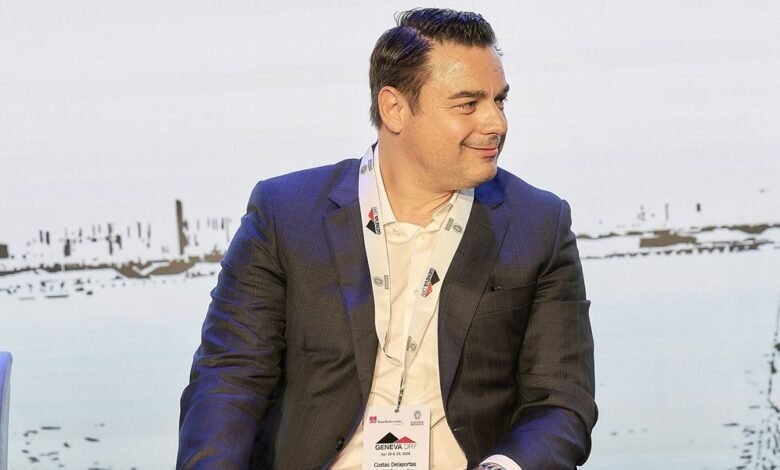
DryDel Shipping has further expanded its Japanese newbuilding campaign by ordering three additional dry bulk vessels, strengthening its long-standing commitment to Japanese shipbuilding excellence.
The Athens-based company, led by Costas Delaportas, confirmed ahead of the upcoming Posidonia exhibition in Athens that the latest agreements include one 82,000 dwt kamsarmax bulk carrier at Shin Kurushima Dockyard, scheduled for delivery in 2028. The order package also includes two 64,000 dwt ultramax vessels, which will be constructed at Nihon Shipyard and Oshima Shipyard, with deliveries planned for 2029 and 2030 respectively.
According to the company, all three vessels will comply with Tier III and Phase 3 environmental regulations and will incorporate next-generation “super eco” designs aimed at significantly improving fuel efficiency and reducing emissions.
The latest contracts continue DryDel’s consistent strategy of investing exclusively in Japanese-built vessels. Since 2021, the Greek owner has placed more than 20 bulker newbuilding orders across several Japanese shipyards, covering vessel segments from handysize to capesize.
At the same time, the company has already taken delivery of 10 Japanese-built ships over the last two years, further modernising its fleet.
DryDel’s previous round of ordering activity took place late last year when the company secured two capesize bulkers at Namura Shipbuilding. Alongside its expansion programme, the owner has also remained active in the secondhand market, selling several handysize and ultramax vessels during 2025 and earlier this year.
Following the newly announced deals, DryDel Shipping’s orderbook now totals 11 vessels with a combined carrying capacity exceeding 1.2 million dwt.
Chief executive Costas Delaportas said the company’s continued investment in Japanese shipbuilding reflects a broader long-term fleet strategy rather than short-term expansion ambitions.
“At DryDel Shipping, we continue to invest exclusively in Japanese shipbuilding, with a long-term perspective and strong confidence in the quality and excellence that Japanese yards consistently deliver,” Delaportas stated.
He added that the relationship with Japanese shipbuilders goes beyond simple commercial investment and is built on years of trust and shared values.
“Our objective is not growth for the sake of growth, but the development of a modern, efficient and commercially competitive fleet that creates lasting value for our charterers and partners worldwide,” he concluded.







