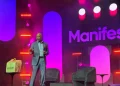
British Columbia Premier David Eby is defending the province’s proposal to buy unsold condominium units, rejecting claims that the initiative is designed to rescue struggling property developers.
The proposal, announced last week alongside Prime Minister Mark Carney, would allow governments to support the purchase of up to 2,200 unsold condominiums across British Columbia before offering them through a rent-to-own programme.
Opposition parties at both the provincial and federal levels have criticised the plan, describing it as a financial lifeline for developers facing weak sales.
Eby dismissed those claims, arguing that the programme would not benefit developers in the City of Vancouver, where he believes the housing market will eventually adjust on its own. According to the premier, the economics simply do not support purchases in Vancouver under the proposed model.
He acknowledged that the announcement came before all details had been completed, saying the lack of information had created confusion around the project.
Looking ahead, Eby said the government sees better opportunities in areas south of the Fraser River, as well as on Vancouver Island and in the Okanagan, where unsold homes could potentially be purchased for less than the cost of building new ones.
He added that buying properties in bulk or acquiring entire developments during bankruptcy proceedings could allow the government to negotiate prices that individual buyers could not obtain.
Eby also made it clear that the proposal is not guaranteed to move forward.
“If people don’t support it, we don’t have to proceed,” he said, adding that the objective is to acquire homes below construction cost while giving more residents a path into homeownership.
The premier argued that developers would, in many cases, still absorb financial losses, while governments would hold the mortgages as public assets rather than provide direct subsidies.
He contrasted the proposal with calls from the Urban Development Institute to remove the GST on new homes, saying that tax relief for developers would amount to a genuine bailout.
Meanwhile, Carney confirmed that the federal government would contribute around 10% of the estimated C$1.45 billion programme, or roughly C$145 million, with British Columbia matching that amount. The remaining funding would come through financing arrangements.
B.C.’s Housing Ministry said discussions with the federal government and industry stakeholders are continuing, with further details expected once the programme has been finalised.