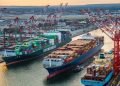
The Vancouver Fraser Port Authority has received the federal approvals needed to begin dredging parts of Burrard Inlet, a project that will allow oil tankers using the Trans Mountain export terminal to leave the port with heavier loads.
Work is expected to start in September along both sides of the navigation channel beneath the Second Narrows Bridge. While the port authority has not confirmed how long the operation will take, it says the changes will make it possible for vessels calling at the Westridge Marine Terminal to load more cargo before heading overseas.
The project mainly benefits Aframax-class tankers, which can measure up to 250 metres in length with a draft of 16 metres. At present, these ships usually depart at roughly 80% of their capacity so they can safely navigate through Burrard Inlet.
The idea of deepening the channel has been discussed by the federal government for some time as part of efforts to improve Canada’s export infrastructure. Although the latest federal budget does not specifically mention the dredging project, it does include broader commitments to strengthen access to international markets through investments in ports, railways and airports.
British Columbia has also backed the initiative, arguing that allowing tankers to carry fuller loads could reduce the number of ship movements needed while improving the efficiency of oil exports.
The port authority stresses that the dredging will not increase the size of ships using the waterway. Aframax vessels will remain the largest tankers permitted to pass beneath the bridge, with the work simply allowing them to operate closer to their full carrying capacity.
The project comes roughly two years after the expanded TMX pipeline entered service in May 2024. Since then, industry groups and some political leaders have argued that expanding export capacity further would help Canada diversify energy shipments beyond the United States.
The port authority says environmental protection remains a key part of the project, which must comply with more than 50 permit conditions. These include monitoring marine life, protecting fish habitat, improving kelp restoration areas and restricting in-water work to the period considered safest for aquatic species, from mid-August to the end of February.
Environmental organisations, including the Sierra Club, have voiced concerns that dredging beneath the Second Narrows Bridge could disturb contaminated sediments and affect recovering eelgrass beds as well as herring, salmon, seals and whales.
According to the port authority, studies indicate the risk of contaminated sediment spreading is low, although contractors will continuously monitor water quality and suspend work if necessary.
Project documents show that most dredging will remove material to depths of around 1.3 metres, with some areas reaching six metres below the seabed, for a total of approximately 25,000 cubic metres of sediment. The authority notes this represents less than one per cent of the material it removes each year from the Fraser River during routine maintenance dredging.
The work will also include removing sections of two disused Metro Vancouver waterlines and installing new navigation aids to improve vessel safety.