




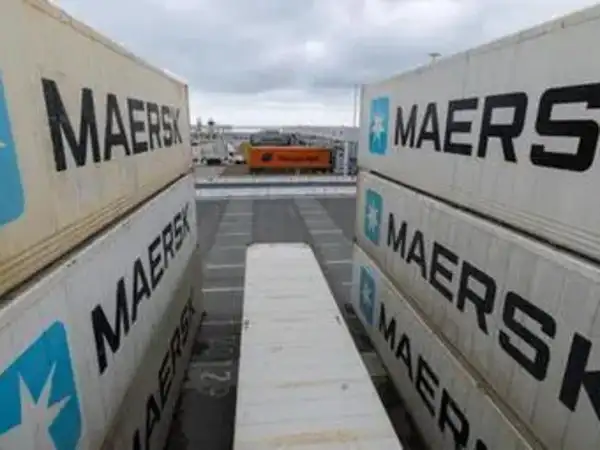
Global container shipping is facing a sharp structural shift, with trade imbalances driving the proportion of empty container movements to unprecedented levels. According to new analysis from Danish consultancy Sea-Intelligence, one in every three containers shipped today is empty, compared with just one in four before the pandemic.
The data highlights a significant deterioration in global equipment efficiency across liner networks. Measured in teu-miles, 30% of all container shipping work now consists of repositioning empty boxes across trade lanes. That’s up from 24% before the pandemic.
Empty container shipments have jumped 65% since the first quarter of 2019 to the same period this year while full container volumes have grown just 17%. Overall demand, measured in TEU-miles, has grown by 40%, indicating that capacity expansion has not translated into balanced cargo flows.
In practical terms, Sea-Intelligence estimates that carriers are now moving twice the volume of empty containers, in distance terms, compared with pre-pandemic levels. The imbalance reflects widening disparities between export-heavy and import-heavy regions, forcing carriers to continuously reposition equipment where demand exists.
The consultancy stresses that these inefficiencies are now a structural feature of global trade rather than a temporary distortion. Where cargo flows are uneven, shipping lines must absorb the cost and operational burden of repositioning empty boxes across long distances, tying up capacity that could otherwise be used for revenue-generating cargo.
Sea-Intelligence warns that these dynamics are feeding directly into freight pricing. “The added cost of these imbalances will result in increased costs – and hence freight rates – for the head-haul shippers,” the consultancy noted, pointing out that it is ultimately high-volume trade lanes that subsidise the cost of global equipment redistribution.
The findings underline a growing challenge for liner operators, where efficiency gains from larger vessels, network optimisation and scale are increasingly being offset by the rising cost of managing persistent global trade imbalances.
- Latest
- Trending
ADVERTISEMENT







