




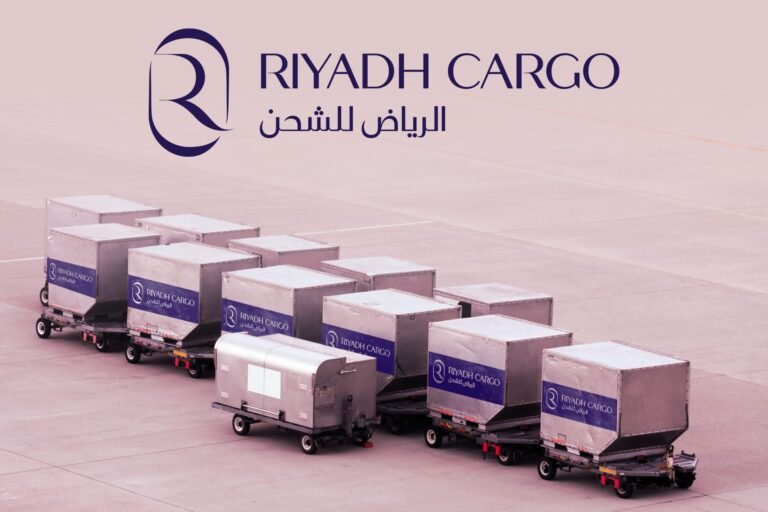
Riyadh Cargo, the cargo division of Riyadh Air, is stepping up its international expansion with the appointment of three new General Sales and Service Agents (GSSAs) in Egypt, India and the United Arab Emirates. The move is part of a broader push to strengthen its presence in some of the most active air freight markets in the world.
Under the new structure, Air Logistics Group India will handle operations in India, Cargo Partners (dnata Cargo) has been appointed for the UAE, and M&C Aviation will represent the business in Egypt. These partners will act as Riyadh Cargo’s local commercial and operational presence in markets that sit at the heart of global trade flows.
The rollout is expected to take place gradually, in line with market readiness and the wider build-up of Riyadh Cargo’s international network.
These latest appointments add to an already growing partner ecosystem. Riyadh Cargo is working with SATS Saudi Arabia Company for ground handling in Riyadh, Worldwide Flight Services at London Heathrow, Crest Cargo Services in Pakistan, Millennium Transportation in Sri Lanka and the Maldives, Envotech Aviation in Bangladesh, and FlyUs in the UK. FlyUs also supports both online and offline sales, including coverage linked to the recent addition of Manchester to the network.
Taken together, this network is designed to ensure smoother service delivery, stronger local market coverage, and more consistent commercial reach across key global trade lanes, while allowing the airline to scale operations in a controlled way.
Egypt, India and the UAE are central to Riyadh Cargo’s growth strategy. Together, they connect major trade flows across Asia, the Middle East and Africa, while also improving onward connectivity into Europe and other global markets through Riyadh. This positioning is particularly important for high-growth segments such as e-commerce, pharmaceuticals and perishables.
Backed by more than 180 next-generation aircraft on order and a target network of over 100 destinations by 2030, Riyadh Cargo is also expanding its belly-hold capacity and integrating multimodal solutions like Road Feeder Services. The aim is to build a more connected end-to-end logistics network that supports Saudi Arabia’s broader ambition to grow its non-oil economy.