



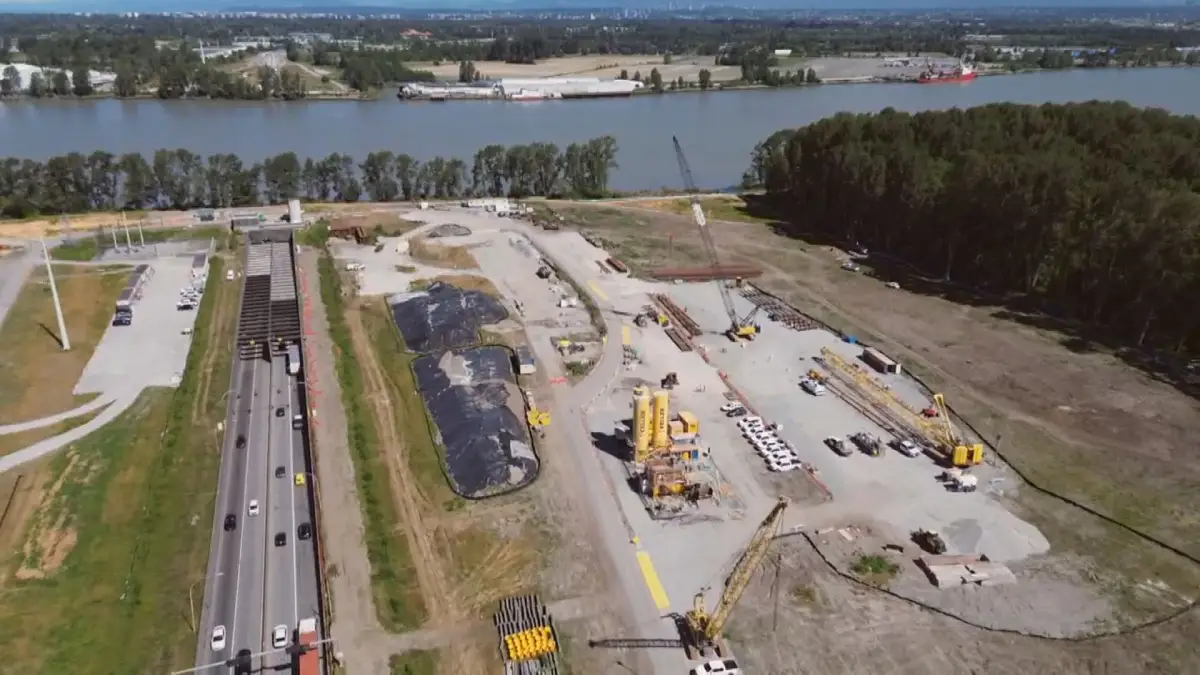
The price tag for replacing British Columbia’s aging George Massey Tunnel has climbed to an estimated $8.5 billion, more than double the $4.15 billion forecast announced in 2021. Provincial officials say the increase reflects years of inflation, rising construction costs and the challenges of delivering a project of this magnitude.
Transportation Minister Mike Farnworth said the revised estimate is the result of changing market conditions since the original budget was prepared. According to him, global supply chain disruptions following the COVID-19 pandemic, inflation and broader geopolitical uncertainty have all contributed to higher infrastructure costs, a trend being seen not only in Canada but around the world.
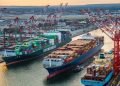
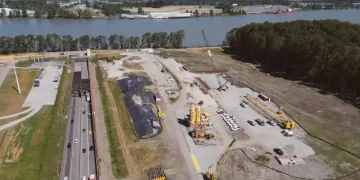
The new eight-lane tunnel will replace the existing crossing between Richmond and Delta, providing a more efficient connection beneath the Fraser River for commuters and commercial traffic. Farnworth described the project as a critical investment that will improve access to the province’s ports and strengthen the movement of goods across British Columbia and the rest of the country.
The updated cost estimate comes less than a week after the provincial and federal governments reached an agreement under which Ottawa will contribute up to $3 billion toward the project through a combination of direct funding and potential low-cost financing.
The project has also undergone major changes in recent months. In June, the province ended its contract with the consortium originally selected to design and build the tunnel. A new procurement process is expected to begin in 2027, while completion has now been pushed back to September 2031, instead of the previously planned December 2030. The Ministry of Transportation said the new budget has been independently reviewed and validated by a third party.
The revised figures have drawn sharp criticism from British Columbia’s Conservative opposition. Infrastructure critic Misty Van Popta argued that the project has been marked by delays, cancelled contracts and steadily increasing costs, pointing out that the original proposal for the crossing carried a price tag of about $3 billion. She questioned how the government could portray the project as a success after such a significant increase in projected costs.