



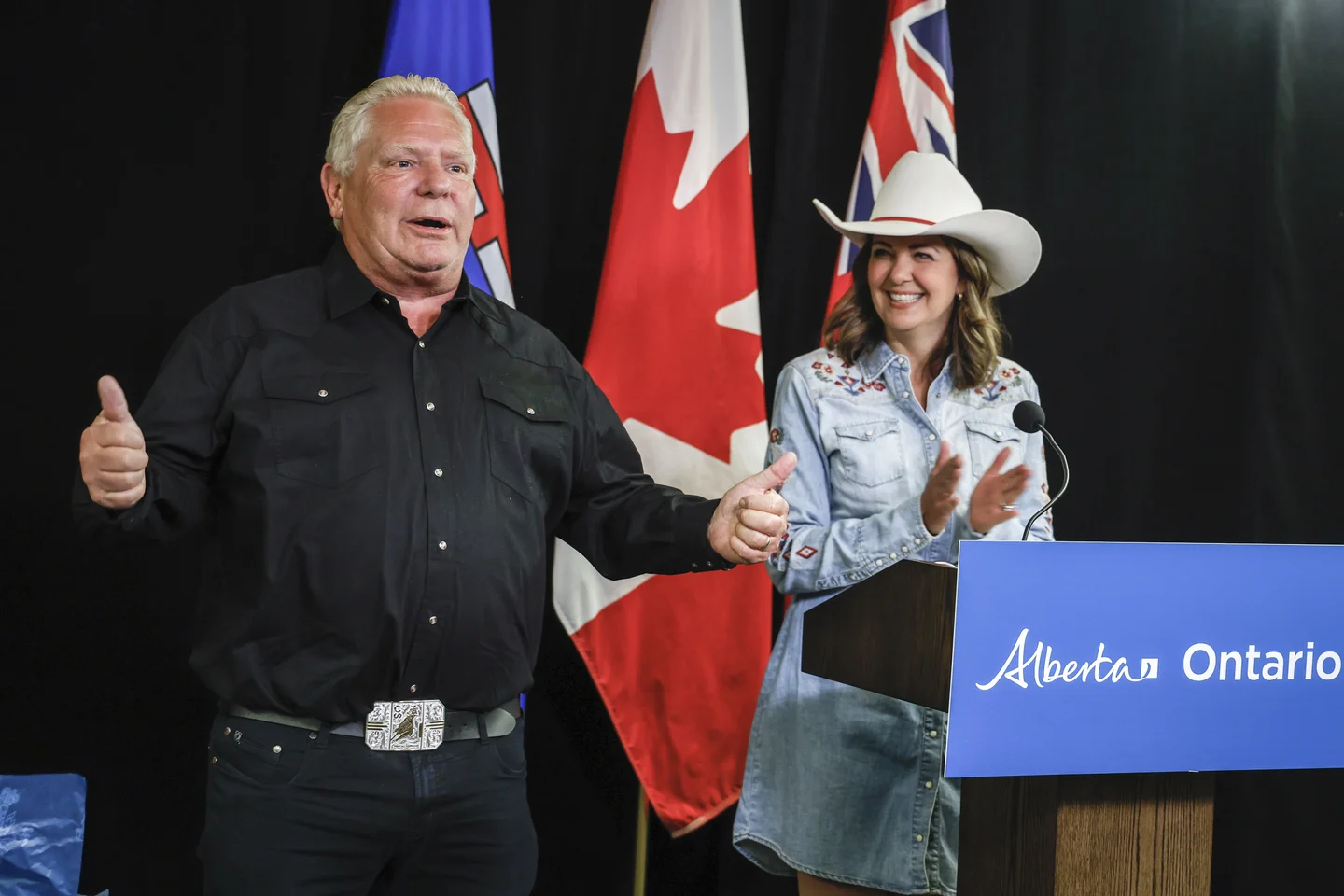
Alberta Premier Danielle Smith and Ontario Premier Doug Ford have unveiled the proposed route for a new 3,300-kilometre oil pipeline that would connect Hardisty, Alberta, to refineries in Sarnia, Ontario, without crossing U.S. territory. Announced during the Calgary Stampede, the project is being presented as a major nation-building initiative aimed at strengthening Canada’s energy independence and supporting long-term economic growth.
According to the Ontario government, the pipeline would transport 500,000 barrels of crude oil per day, helping reduce Canada’s reliance on imported refined petroleum products. Calling the proposal a “win-win-win,” Ford said the project would benefit both provinces while creating broader economic advantages for the country as a whole.
The idea stems from an agreement signed by Smith and Ford at last year’s Calgary Stampede to study the feasibility of an east-west energy corridor. That study is still underway and is expected to be completed before the end of the year. It will determine the project’s estimated cost, construction timeline and overall viability, while discussions with potential private-sector partners continue. Ford also confirmed that public financing remains one of the options being considered.
For Smith, the pipeline represents more than just a domestic infrastructure project. She said it would allow more Alberta crude to be refined and consumed within Canada while also strengthening the country’s ability to reach European energy markets. According to her, the proposal sends a strong message that Canada is once again ready to invest in major energy infrastructure.
The project has already received support from Saskatchewan Premier Scott Moe, who said it could generate new revenues to fund public services such as healthcare, education and public safety. Asked about Manitoba’s position, Ford expressed confidence that an agreement could eventually be reached with Premier Wab Kinew, noting that the pipeline could eventually support future energy exports through the Port of Churchill.
The announcement comes only days after Smith introduced another major pipeline proposal that would transport more than one million barrels of oil per day from Alberta to British Columbia’s West Coast. That project is currently under review by the federal government and could be fast-tracked later this year. Smith said the growing momentum behind both projects reflects a major shift in Canada’s approach to energy infrastructure, arguing that pipelines have gone from being politically difficult to becoming a national priority.
Unlike previous private-sector pipeline projects, however, neither proposal currently has significant commercial backing. The West Coast project is currently supported by Pembina Pipeline, which holds a 10% stake, alongside the Alberta government and the federally owned Trans Mountain Corporation. Smith has suggested that ownership could evolve as the project advances.
Not everyone supports the plan. Greenpeace Canada criticized the possibility of using public money to finance new oil infrastructure, arguing that the absence of major private investors raises questions about the project’s commercial viability. The organization said Canada should instead prioritize investments in renewable energy technologies, which it believes offer faster and more sustainable long-term returns.