



The global shipping industry is approaching a critical moment.
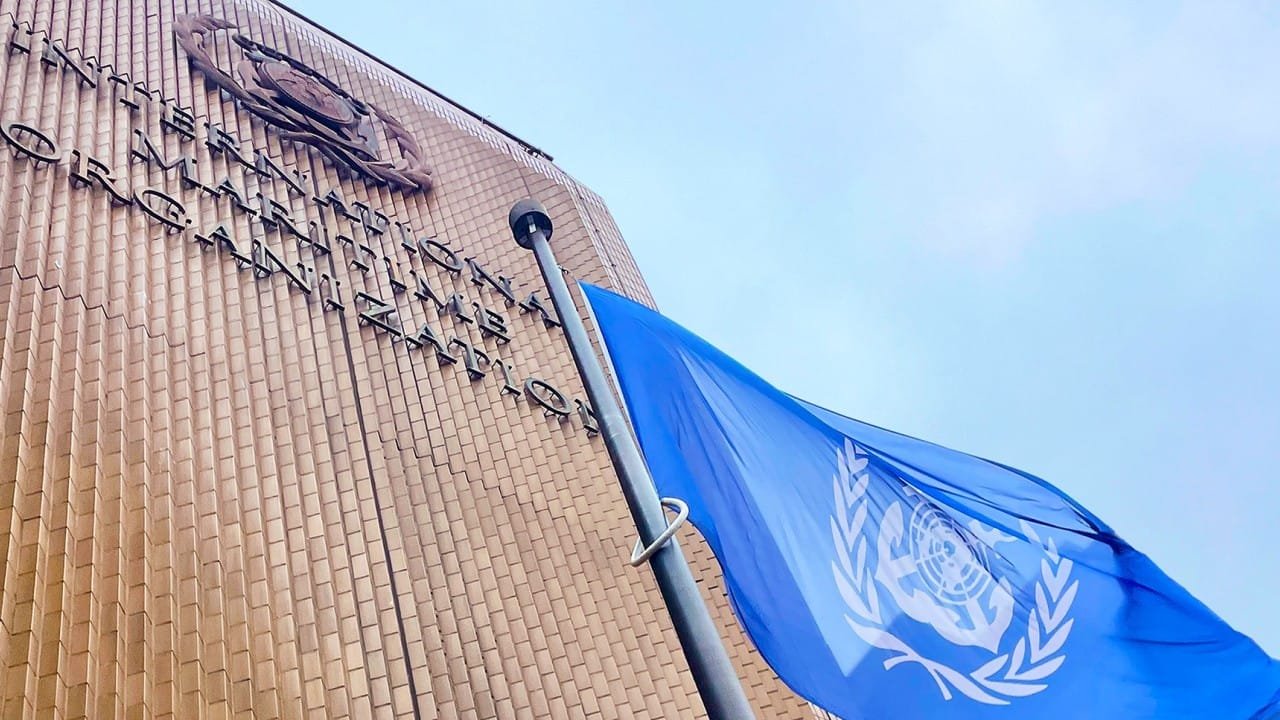
As the IMO Intersessional Working Group on Greenhouse Gas (ISWG-GHG) emissions begins its latest discussions, delegates are meeting against a backdrop that is becoming increasingly difficult to ignore: the climate crisis is no longer a distant threat, and the pressure to act is intensifying.
Across Europe, catastrophic climate events have marked the summer, while the recent collapse of a glacier in the Himalayas has highlighted the accelerating effects of global warming. A study released in March by the International Centre for Integrated Mountain Development found that ice loss rates in the Hindu Kush have doubled since 2000.
The coming months could bring further disruption. El Niño is expected to reach its most severe phase, Rhine water levels are already at their lowest, and typhoons are continuing to disrupt shipping across parts of Asia.
Against this backdrop, the IMO is once again attempting to break the deadlock surrounding the Net Zero Framework (NZF).
The framework was due to be confirmed during the Extraordinary Session of the Marine Environment Protection Committee (MEPC) last October. Instead, the process was derailed after the US and other countries used threats in an attempt to prevent nations from voting in favour of the framework. The vote was subsequently postponed until November this year, giving governments additional time to negotiate.
Now, the pressure is building again.
A possible opening for compromise
Simon Bergulf, vice president of environment and climate at the World Shipping Council (WSC), believes there may still be room for an agreement following comments made on 20 August by Federal Maritime Commission (FMC) chair Laura DiBella.
DiBella argued that emissions reductions should be directly linked to the demonstrated viability and realistic availability of alternative fuels rather than being tied to a fixed implementation date or a restricted choice of fuels.
She also said alternative fuels would need to meet clear and agreed criteria covering affordability, global availability and scalability, while avoiding additional costs being transferred to the public.
From the US perspective, both LNG and bio-LNG could potentially account for more than 60% of global maritime fuel by 2050.
For critics of that position, however, the proposal raises serious questions. Using LNG as a major part of the solution to a climate crisis caused by greenhouse gas emissions risks, in their view, replacing one problem with another.
Bergulf nevertheless believes Washington’s position has become more flexible.
“They have some red lines, but I would say it’s much more constructive to come and say, here are the red lines that we have, we need to make this work,” he told Seatrade Maritime News.
The US is also expected to become a global leader in bio-LNG production. DiBella has therefore insisted that American-produced bio-LNG should be recognised as a qualifying fuel under the framework.
Pressure to keep the original framework intact
Not everyone believes the NZF should be changed.
For some organisations, the framework approved at the April 2025 MEPC83 should be implemented without dilution.
Sapphire Ross, policy officer at NGO Opportunity Green, warned that shipping cannot claim to be following a credible net-zero pathway while continuing to rely on solutions that do not deliver meaningful emissions reductions.
That concern is shared by the WSC, although the organisation is simultaneously trying to remain fuel agnostic while engaging with the different proposals on the table.
“We need something that’s actually sending a very strong signal to the production and fuel offtake agreements, and that signal needs to be aligned with the 2023 strategy,” Bergulf said.
The WSC therefore finds itself walking a narrow line. Bergulf said the proposal submitted by Liberia and Panama could still form part of the solution, but would need to incorporate elements from other proposals.
Fuel costs at the centre of the dispute
The proposals led by Liberia would modify the NZF by excluding alternative fuels that cost more than 15% above standard fuel oil.
In practice, this would mean that greenhouse gas targets could change depending on whether cleaner fuels are available and affordable.
The Liberian proposals would also reduce the size of the Net Zero Fund, an approach that is supported by the US.
Washington has described the carbon charges as an unnecessary burden on American shippers and vessels operating in international waters, warning that billions of dollars in annual compliance costs could eventually be passed on to US consumers.
For critics, however, the position effectively places commercial interests ahead of the climate emergency.
Scientists are already warning that achieving the Paris Agreement goals may be increasingly difficult, while the consequences of a warming planet are already being experienced around the world.
Brazil offers another possible route
Bergulf points to another proposal that could potentially bridge some of the differences.
Brazil has suggested allowing carriers to accumulate credits for using low-carbon fuels across their fleets. Those credits could then reduce the payments made into the Net Zero Fund.
The approach could provide carriers with greater flexibility while maintaining an economic incentive to move towards lower-carbon fuels.
Opportunity Green, however, is focused on ensuring that the financial mechanism delivers tangible benefits to the countries most vulnerable to climate change.
Ross argues that regulations must ensure that money reaches small island states and least developed countries nations that, in her words, “did the least to cause this crisis but face its greatest impacts.”
For Opportunity Green, the significance of the decisions being taken this week extends well beyond the maritime sector.
Africa pushes for a predictable source of funding
Dr Dola Oluteye, senior fellow at the University College London Energy Institute and founder of the Professional African Technical Network Advisory (PATNA), said growing African support for the NZF should come as no surprise.
For many African countries, the framework could create a predictable stream of revenue.
African nations are therefore arriving at the IMO this September with concrete proposals for how the future fund should operate, demonstrating their determination to see an agreement adopted before the end of the year.
The political arithmetic will be crucial.
With expectations that any vote during the Extraordinary Session of the MEPC at the end of November could be extremely close potentially around 55 votes in favour of the NZF against 51 opposed supporters of the framework fear that failure to reach an agreement could set the industry back by years.
Billions already invested in the transition
The debate is not taking place in isolation from the industry’s investment decisions.
Ports and vessel operators have already committed significant amounts of capital to technologies and solutions designed to move shipping towards its objective of becoming climate neutral by around 2050.
For companies making those investments, regulatory certainty is becoming just as important as the availability of technology and fuel.
Höegh Autoliners CEO Andreas Enger summed up the industry’s dilemma: “Laying the regulatory foundation now is critical to ensuring that these investments take shipping into the right direction.”
The coming discussions at the IMO will therefore be about more than simply adjusting a regulatory framework.
They will determine what kind of economic incentives shipping receives, which fuels are considered viable, who ultimately pays for the transition and how much of the financial burden reaches the countries most exposed to climate change.
Above all, the negotiations will test whether governments can find common ground between the immediate economic realities of global shipping and the increasingly urgent demands of the climate crisis.
The decision taken later this year could define the industry’s regulatory direction for a generation.