



Ahead of the Air & Space Forces Association’s Air, Space & Cyber Conference, taking place from 14 to 16 September 2026 in National Harbor, Maryland, aerospace company Radia is showcasing the capabilities of its WindRunner™ aircraft and its potential role in addressing one of the space industry’s increasingly difficult logistics challenges.
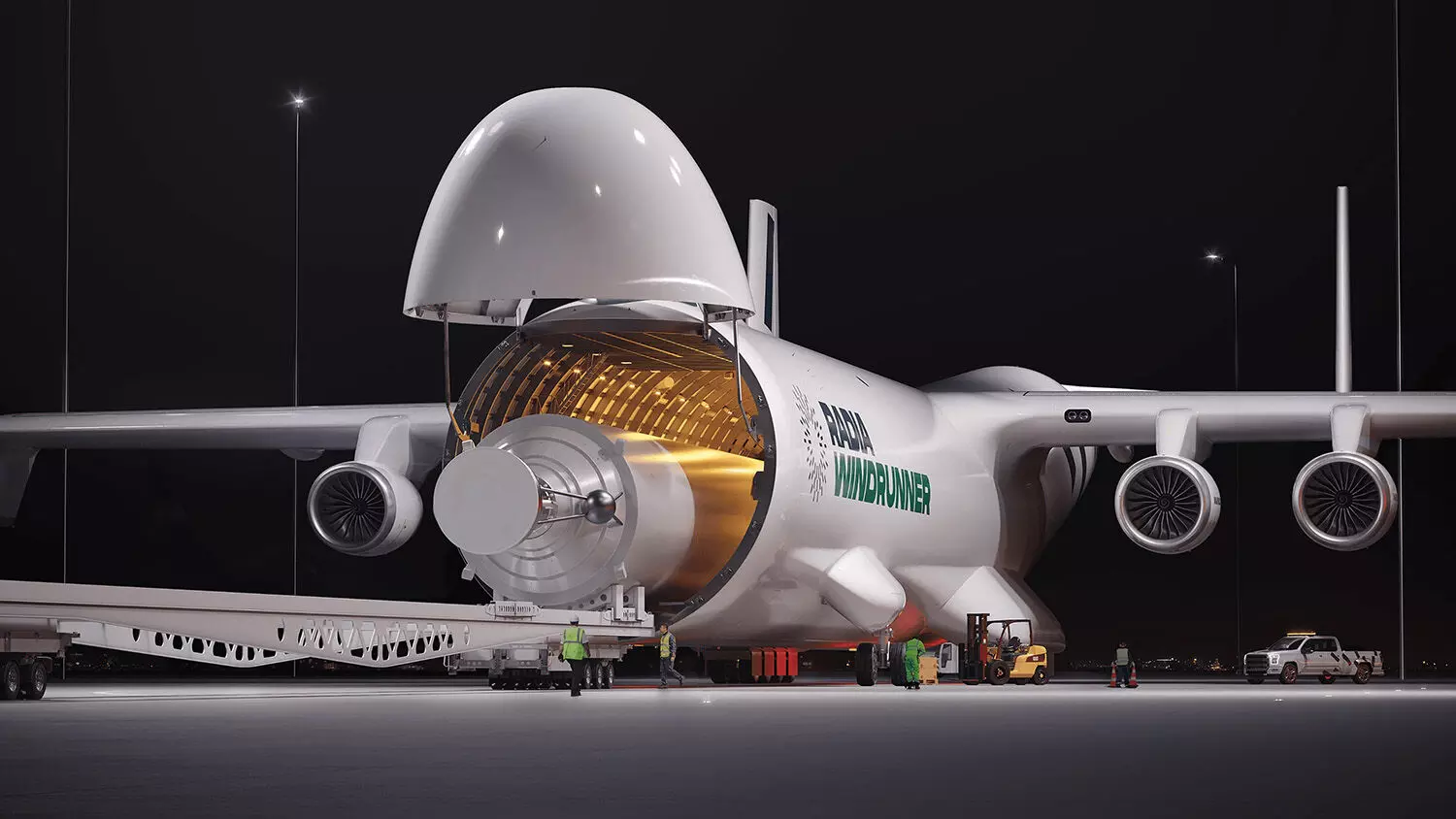
Designed as the world’s largest aircraft by volume, WindRunner has been developed specifically to transport fully assembled rockets, boosters and next-generation satellites as these systems continue to exceed the physical limits of existing transportation networks.
The aircraft’s design focuses on cargo volume rather than payload weight alone. This approach is intended to make it possible to move exceptionally large space hardware directly between launch sites, manufacturing facilities and austere or distributed operating locations without the extensive disassembly normally required.
A logistics gap created by larger space systems
Mark Lundstrom, Radia’s Founder and CEO, said the development of WindRunner responds to a growing mismatch between the ambitions of the modern space sector and transportation infrastructure largely designed decades ago.
“The rockets, boosters, and spacecraft that define the space enterprise’s ambitions keep getting larger, more capable, and more valuable. Yet we’re still relying on transportation systems designed decades ago,” said Mark Lundstrom, Founder and CEO of Radia.
He added that WindRunner was designed to transport extremely large equipment to difficult-to-reach locations, including fully assembled boosters, recovered launch vehicles and next-generation satellites.
According to Lundstrom, the aircraft could transport such systems intact in hours rather than days, avoiding disassembly. Its low cargo deck height, nose door and innovative cargo-loading system are intended to simplify the handling of oversized space-related cargo and create a new logistics capability for the space enterprise.
The need for such a capability is becoming more apparent as modern space programmes increasingly encounter transportation limitations before reaching the limits of their ambitions.
Rocket stages, boosters, satellites and other mission-critical systems are growing physically larger, while the road networks, maritime ports and conventional cargo aircraft used to transport them have changed comparatively little over the past several decades.
As a result, high-value aerospace hardware frequently has to be disassembled, constrained to conventional transportation dimensions or moved through slower combinations of maritime and road transport. Such journeys can take several days or even weeks.
These established logistics processes can increase costs, create schedule risks and expose sensitive, high-value aerospace equipment to additional handling.
Supporting responsive and reusable space operations
At the same time, the U.S. Space Force and commercial launch providers are investing heavily in reusable launch systems, distributed space operations and highly responsive launch capabilities.
Those programmes require large space systems to move rapidly between manufacturing plants, testing facilities, launch complexes, recovery locations and allied operating bases.
Radia says WindRunner is intended to provide a dedicated transportation capability for those requirements.
One of the aircraft’s principal advantages is its ability to support responsive space operations by moving large launch systems in hours instead of days. The same capability could support the recovery and repositioning of reusable launch vehicles, potentially helping operators reduce turnaround times.
WindRunner is also designed to expand the possibilities for spacecraft development. Radia says the aircraft can accommodate satellites with a dimensional envelope approximately twice the size of satellites that can currently be transported fully assembled.
That additional space could create new design opportunities for national security, communications, Earth observation and intelligence, surveillance and reconnaissance (ISR) missions.
Accessing locations beyond conventional air transport
WindRunner is not intended solely for conventional airports and established logistics hubs.
The aircraft is being designed with short takeoff and landing capability from approximately 1,800-metre unpaved runways. This would allow it to reach emerging spaceports, distributed launch locations and remote operating sites that are beyond the practical reach of many standard commercial aircraft.
Its cargo-handling concept is equally focused on reducing complexity.
Fully assembled rockets, boosters and satellites can be moved intact through a roll-on/roll-off approach. By eliminating the need for disassembly and subsequent reassembly, the system is intended to support offsite integration and direct delivery to launch locations.
Radia also says WindRunner has been designed to work with existing infrastructure. The aircraft can use standard cargo-handling equipment and conventional airfields, avoiding the need for specialised loading systems or bespoke facilities.
Entry into service targeted for the early 2030s
Radia is targeting entry into service for WindRunner in the early 2030s. Development is based on proven components and established certification processes.
The company also plans to offer flexible Transport as a Service models, allowing government and commercial customers to access additional logistics capacity when surge requirements arise.
WindRunner is not being positioned as a replacement for existing strategic airlift capabilities or launch infrastructure. Instead, Radia sees the aircraft as a complementary capability designed to extend those networks by handling oversized, volume-dominated cargo that no existing aircraft can currently transport intact.
At the Air, Space & Cyber Conference, Radia representatives are meeting with leaders from the Department of Defense, the U.S. Space Force, allied governments and commercial launch providers.
The company is presenting the aircraft at Booth #551 at the Gaylord National Resort & Convention Center, where discussions are focusing on WindRunner’s development and its expanding potential applications across the defence and space sectors.