



A routine traffic stop in Nebraska led to the discovery of more than $250,000 worth of allegedly stolen copper on October 7, after deputies found a semi-truck carrying a heavy load that had shifted dangerously toward one side of its trailer. The vehicle was stopped at approximately 2 p.m. on Interstate 80 by the Lancaster County Sheriff’s Office Criminal Interdiction Unit.
According to court records, the trailer was leaning heavily toward the passenger side. The driver was unable to produce vehicle registration documents, a bill of lading or basic information about the freight he was transporting.
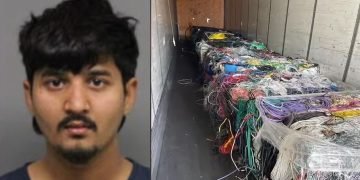
Authorities identified the driver as Raman Pal, 22, of Tracy, California. Pal reportedly could not explain what the truck was carrying, where the shipment had been collected or where it was supposed to be delivered.
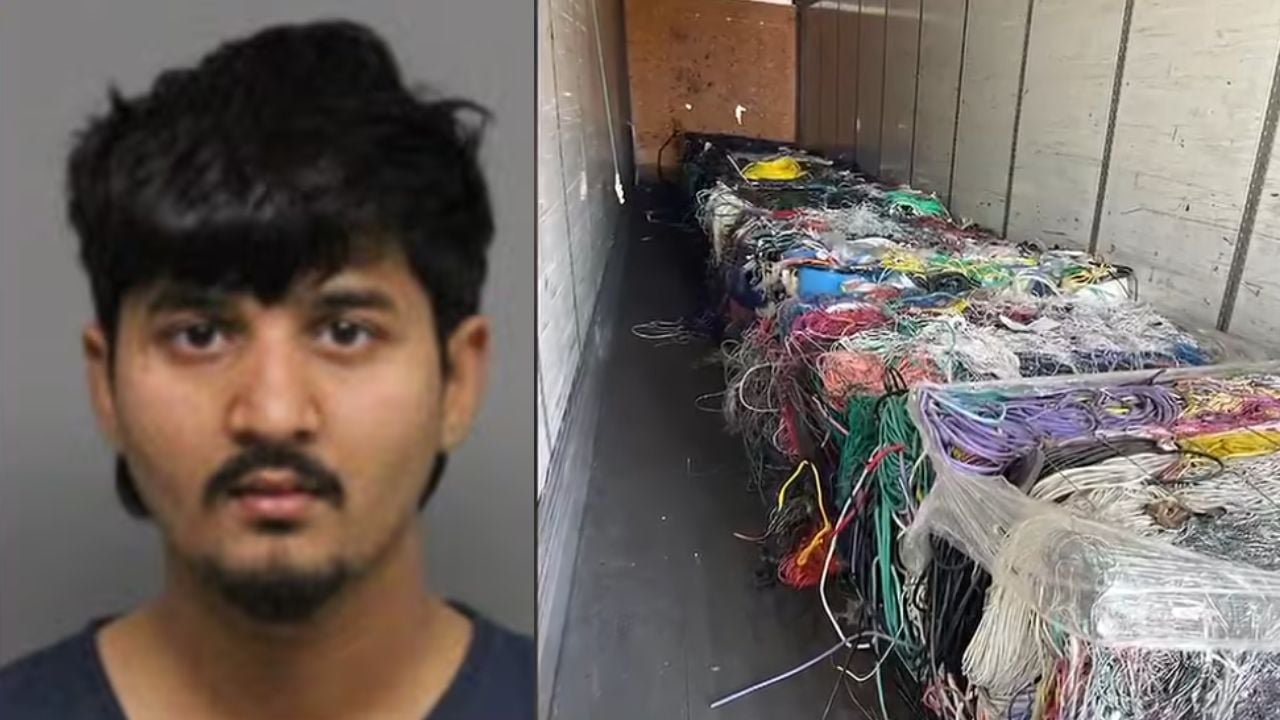
After obtaining consent to search the truck and trailer, deputies discovered 11 pallets of copper wire weighing 43,937 pounds, along with two bolt cutters. The investigation subsequently revealed that the shipment was being transported by a carrier different from the one expected to handle the delivery.
The truck had already passed its designated delivery point
The bill of lading recovered during the search identified Imperial Metal Group in Chicago as the shipment’s pickup location and Lakeside Auto Recyclers, a recycling company in Carter Lake, Iowa, as its destination. Court records identify Imperial Metal Group as the owner of the stolen copper.
However, deputies stopped Pal near Lincoln, Nebraska, after the truck had already passed Carter Lake. Lakeside Auto Recyclers confirmed that the vehicle was traveling westbound off its intended route. The affidavit does not explain why the driver continued beyond the designated destination.
Investigators also identified a discrepancy between the carrier responsible for the delivery and the company operating the truck.
According to the affidavit, Get There Real Quick LLC was supposed to transport the shipment. Federal Motor Carrier Safety Administration (FMCSA) records identify the Illinois-based carrier under USDOT number 4381300 and MC number 1717529. The company operates in interstate commerce with six power units and 10 drivers.
Lakeside Auto Recyclers told deputies that Nawab Xpress Inc. was not supposed to have possession of the copper.
The truck displayed Nawab Xpress’s name and USDOT number 4172559. FMCSA records identify the California-based company as an interstate carrier operating with one power unit and one driver. The affidavit does not establish how Nawab Xpress obtained the shipment or how the copper passed from the expected carrier to the company identified on the truck.
Shipper confirms the copper was stolen
During the traffic stop, investigators contacted Zach Spellman, president of Imperial Metal Group. Spellman confirmed that the copper belonged to his company and said the shipment had been stolen because the authorized carrier was not in possession of it.
He also told investigators that the trailer did not have the load lock and seal required by Imperial Metal Group, raising additional concerns about the shipment’s handling and security.
The case may represent part of a broader pattern. Spellman told deputies that Imperial Metal Group had suffered four stolen metal shipments this year, with all four disappearing “in the same fashion.” According to the sheriff’s briefing, the combined value of those losses exceeded $1 million.
Investigators have not established whether the same individuals were responsible for the four incidents or whether the thefts were connected.
Criminal charges faced by driver; investigation continues
Prosecutors charged Pal with criminal impersonation and theft by unlawful taking of property valued at more than $5,000, according to court records. The complaint says the property stolen belongs to The Imperial Group LLC.
Deputies also discovered two identification cards with different names inside the cab of the truck. One of the cards was a real California identification card belonging to Pal, the affidavit said.
After Pal’s arrest, authorities placed the truck and trailer under criminal hold as investigators continued to look into how the shipment changed hands.
Many questions remain unanswered. The affidavit does not identify a freight broker that arranged the shipment and does not say how Pal obtained the load in Chicago. It does not refer to any fictitious pickup operation or name any federal agency involved in the investigation.
FreightWaves reached out to the Lancaster County Sheriff’s Office, Imperial Group and Lakeside Auto Recyclers for more information. None had replied prior to publication.
The sheriff’s office says the investigation may involve more people than just the driver. “There’s a lot more people involved in this than just the 22-year-old,” the sheriff’s office told reporters.
Officials have not yet publicly named any other suspects, nor have they linked the shipment to other losses reported by Imperial Metal Group.
What the case means for freight security
The Nebraska investigation is an example of how vulnerabilities can arise when a high-value shipment is picked up, transferred or transported without the anticipated carrier being identified.
A shipment can go off the planned route long before the truck itself has to stop and wait, particularly if the discrepancies in the documentation or vehicle details are not noticed right away by the shipper, carrier and consignee. In this case, the discovery came after a traffic stop for an uneven load of the trailer and the driver’s inability to provide basic freight information.
The losses at Imperial Metal Group also highlight the financial toll of a string of cargo thefts. The case also raises questions of carrier verification, shipment tracking and security controls placed on valuable metal freight, with four shipments allegedly stolen with a combined value of more than $1 million.
Additional safeguards for shippers, brokers and carriers prior to freight leaving a facility may include verifying the identity of the assigned carrier, checking driver and vehicle credentials, validating shipment documents and ensuring required security devices are in place.
Fraud compliance training to avoid cargo theft
As a Certified Fraud Compliance Officer (CFCO), you will learn how to spot red flags including carrier impersonation, driver identity discrepancies and suspicious shipping documentation.
A uniform verification process can add another check point before releasing high value freight. By matching carrier, driver, vehicle, and shipment data against the authorized transport arrangement, teams can spot discrepancies before a shipment leaves the shipper’s control.
Training won’t prevent cargo theft, but improved verification processes can help keep lucrative shipments out of the hands of bad actors, and help logistics teams escalate suspicious activity before losses occur.