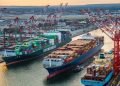




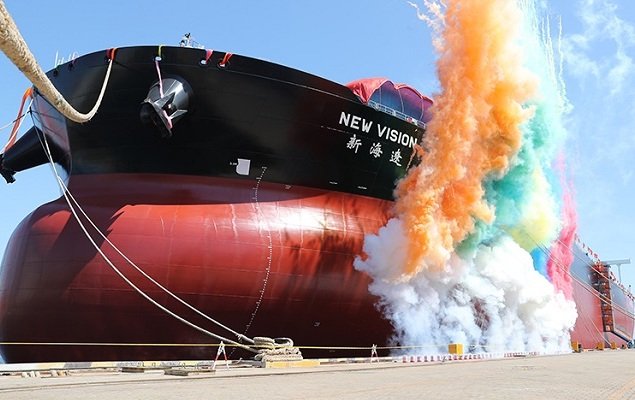
The tanker sector is moving deeper into one of the biggest ordering waves the industry has ever seen, with new research suggesting 2026 could end up recording the highest annual tanker newbuilding total in history.
According to investment bank Evercore ISI, the first four and a half months of the year have already produced the fifth-highest level of tanker ordering seen this century, underlining how aggressively owners are continuing to expand fleets while freight markets remain exceptionally strong.
In a recent report, Evercore ISI warned that owners appear unwilling to slow down while market conditions remain favourable.
“Owners just can’t let the golden goose be,” the bank said, pointing to a growing ordering spree that is giving the market a clearer view of what could eventually become the end of the current tanker boom particularly if tensions in the Middle East begin to ease.
The pace of contracting has accelerated sharply across the crude tanker market. BIMCO recently reported that the first quarter of 2026 saw the highest quarterly crude tanker contracting activity ever recorded, helping push the global shipping orderbook to a 17-year high.
Becky Smart, research analyst at Sentosa Shipbrokers in Singapore, said there is now a growing risk that tanker supply could eventually outpace demand. She noted that the tanker fleet is projected to expand by around 11% in dwt terms by the end of 2027, while oil demand growth forecasts remain closer to just 1% to 2% over the same period.
She added that the imbalance could become even more pronounced if the Hormuz crisis continues to weigh on global economic activity and energy demand.
At the same time, Smart stressed that the tanker market is rarely straightforward and often benefits from inefficiencies created by geopolitics, sanctions and rerouted trade flows.
According to her, while the raw numbers point toward a strong risk of oversupply on paper, the reality of the tanker market is more complex. Factors such as ageing fleets, sanctions-linked trades, disrupted routes and operational inefficiencies could allow the market to absorb more new tonnage than many expect before freight rates come under real pressure.
Analysts at Breakwave Advisors have also warned that the sheer volume of recent tanker orders could eventually create a “meaningful negative balance” over the longer term and potentially trigger a future downcycle.
Others in the market, however, believe the current ordering boom partly reflects the need for large-scale fleet renewal.
Ralph Leszczynski, head of research at broker Banchero Costa, noted that the industry is now roughly 20 to 25 years removed from the massive fleet replacement cycle triggered by the
phase-out of single-hull tankers. As a result, a significant portion of the current global tanker fleet is now entering the age range where demolition and replacement naturally become necessary.
He also pointed to the large number of ageing vessels still operating within shadow trades linked to Russia, Iran and Venezuela. Many of those ships, he said, are old, poorly maintained and unlikely to ever return to mainstream compliant trading, meaning a future exit from those trades could eventually force a wave of demolition and replacement demand.
For now, though, the tanker market remains exceptionally strong.
CMB.TECH chief executive Alex Saverys described current tanker conditions as “red-hot” while presenting the company’s first-quarter results this week. He said the industry is currently enjoying a rare “Goldilocks moment,” although uncertainty surrounding global trade and the rapidly expanding orderbook continues to hang over the longer-term outlook.