

• Latest
  • Trending
Middle East races to reshape global trade corridors as Hormuz crisis deepens

Middle East races to reshape global trade corridors as Hormuz crisis deepens

May 19, 2026
AI robots move into shipyards to catch construction errors before they turn into costly delays

AI robots move into shipyards to catch construction errors before they turn into costly delays

May 19, 2026
EU-backed SPARK project to bring offshore charging zones for idling ships in Denmark

EU-backed SPARK project to bring offshore charging zones for idling ships in Denmark

May 19, 2026
ADVERTISEMENT
Ericsson and Net Feasa unveil maritime 5G and AI connectivity platform for container shipping

Ericsson and Net Feasa unveil maritime 5G and AI connectivity platform for container shipping

May 19, 2026
Thenamaris expands LR2 fleet with fresh Chinese newbuilding order at Hengli

Thenamaris expands LR2 fleet with fresh Chinese newbuilding order at Hengli

May 19, 2026
GEFO strengthens inland gas fleet with Unigas Shipping acquisition

GEFO strengthens inland gas fleet with Unigas Shipping acquisition

May 19, 2026
WinGD breaks new ground with world’s first ethanol-fuelled marine engine orders

WinGD breaks new ground with world’s first ethanol-fuelled marine engine orders

May 19, 2026
EU weighs tighter controls on Irish alumina exports amid concerns over indirect links to Russian defence supply chain

EU weighs tighter controls on Irish alumina exports amid concerns over indirect links to Russian defence supply chain

May 19, 2026
Maritime leaders warned AI success depends on data, workflows and industry readiness

Maritime leaders warned AI success depends on data, workflows and industry readiness

May 19, 2026
Tanker ordering boom puts industry on course for record-breaking year

Tanker ordering boom puts industry on course for record-breaking year

May 19, 2026
Aristides Pittas expands dry bulk newbuilding push in China

Aristides Pittas expands dry bulk newbuilding push in China

May 19, 2026
Strategic Marine wins new crew transfer vessel order from Mainprize Offshore

Strategic Marine wins new crew transfer vessel order from Mainprize Offshore

May 19, 2026
Safe Bulkers continues fleet renewal with sale of two older dry bulk vessels

Safe Bulkers continues fleet renewal with sale of two older dry bulk vessels

May 19, 2026
  • Home
  • About Us
  • Press Room
  • Podcasts
  • Media Kit
  • Contact Us
  • Careers
Tuesday, May 19, 2026
  • Login
  • Register
The Logistic News
  • Logistic
  • Air
  • Maritime
  • Land
  • World
  • Business
  • Tech
  • Events
  • Advertise
No Result
View All Result
  • Logistic
  • Air
  • Maritime
  • Land
  • World
  • Business
  • Tech
  • Events
  • Advertise
No Result
View All Result
The Logistic News
No Result
View All Result
Home Business

Middle East races to reshape global trade corridors as Hormuz crisis deepens

Governments, ports and energy giants across the Gulf are accelerating new export routes, pipelines and logistics corridors as disruptions around the Strait of Hormuz continue to shake global trade and energy markets.

The Logistic News by The Logistic News
May 19, 2026
in Business, Logistic, Maritime, World
Reading Time: 4 mins read
0
Middle East races to reshape global trade corridors as Hormuz crisis deepens
ADVERTISEMENT

The ongoing shipping crisis around the Strait of Hormuz is now triggering something far bigger than temporary disruption. Across the Middle East and Asia, governments, ports and major industrial groups are moving quickly to redesign trade routes and reduce dependence on one of the world’s most sensitive maritime chokepoints. 

According to the International Energy Agency, the scale of disruption caused by the conflict has already surpassed the oil shocks of the 1970s, pushing both public and private players to accelerate long discussed infrastructure projects that until recently had remained on the drawing board. 

One of the latest developments came this week as AD Ports Group and Abu Dhabi petrochemical giant Borouge signed a partnership agreement focused on creating an alternative export hub on the UAE’s east coast. The project would rely on Fujairah Terminals and other eastern port facilities to support international shipments outside the Strait of Hormuz. 

ADVERTISEMENT

Borouge, already the largest exporter using AD Ports’ infrastructure, said the new agreement goes beyond traditional cooperation.Both companies will now explore dedicated polyolefins infrastructure on the east coast while also working directly with shipping lines to establish new maritime routes through Fujairah. 

“We are building a more flexible and diversified network that enhances reliability, ensures continuity of supply, and reinforces our position as a trusted global supplier,” said Borouge CEO Hazeem Sultan Al Suwaidi. 

Fujairah has rapidly become one of the Gulf’s most strategic logistics locations because it sits outside the Strait of Hormuz on the Gulf of Oman. However, the port has not escaped the effects of the conflict entirely, with drone attacks already disrupting oil-loading operations since the war began in late February. 

Despite those risks, the UAE is doubling down on its east coast strategy. Abu Dhabi Crown Prince Sheikh Khaled bin Mohamed bin Zayed recently confirmed the acceleration of a new West-East Pipeline project that would significantly expand export capacity through Fujairah by 2027. 

The UAE already operates the Abu Dhabi Crude Oil Pipeline linking Habshan to Fujairah, with an estimated capacity of between 1.5 and 1.8 million barrels per day. 

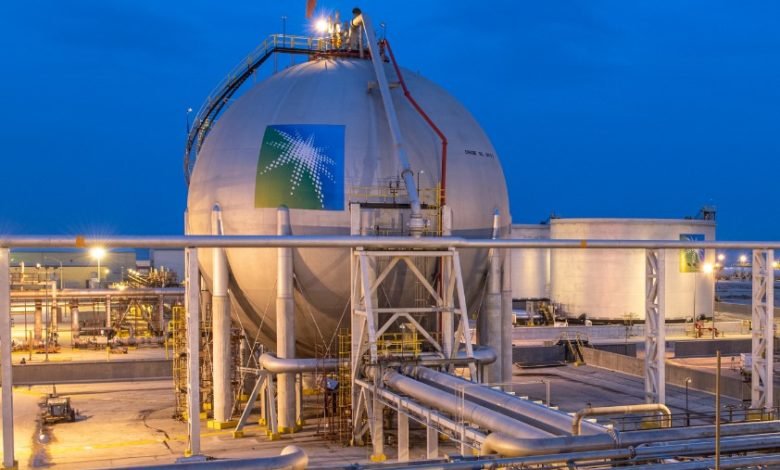
Saudi Arabia has also been relying heavily on its East-West pipeline system stretching from Abqaiq to the Red Sea port of Yanbu. The 1,200 km pipeline currently provides around 4.5 million barrels per day of export capacity and has been described by Aramco CEO Amin Nasser as a “critical lifeline.” 

Still, even together, the UAE and Saudi pipeline systems remain far below the nearly 20 million barrels of oil that used to transit through Hormuz every day before the conflict escalated. 

Elsewhere in the region, Iraq is attempting to revive the long-idled Kirkuk-Ceyhan pipeline linking Iraqi oilfields to Turkey’s Mediterranean coast. Baghdad plans to restart flows at around 170,000 barrels per day before eventually increasing capacity to 250,000 barrels. 

At the same time, Iraq is revisiting older pipeline proposals connecting the country to Oman’s port of Duqm, Jordan’s Red Sea port of Aqaba and potentially Egypt — projects that were previously stalled by political instability, financing issues and regional tensions. 

Iran itself theoretically possesses an alternative export route through the Goreh-Jask pipeline, which bypasses Hormuz entirely. However, despite a test shipment from Jask in late 2024, the route remains largely inactive and is still not considered a fully operational crude export solution by the IEA. 

Some proposals now being discussed are even more ambitious. Among them is the idea of building a canal through the Hajar Mountains toward Fujairah  effectively creating a Gulf equivalent of the Suez or Panama Canal. Analysts, however, warn that the engineering complexity and cost of such a project could run into hundreds of billions of dollars.

The shift is also reshaping logistics far beyond the Gulf region. 

China, which depended heavily on Hormuz-linked energy imports, has intensified investment into the Trans-Caspian International Transport Route, better known as the Middle Corridor. The route connects China to Europe through Kazakhstan and the Caspian Sea, bypassing traditional maritime chokepoints. 

Trade activity along the corridor has expanded rapidly. Road transport now accounts for more than half of China’s trade with Central Asia, compared with less than 20% only a few years ago. Meanwhile, trade between China and Kazakhstan reached a record $48.7 billion in 2025. 

The Baku-Tbilisi-Kars railway one of the key arteries of the Middle Corridor — has also undergone major upgrades, with annual capacity increasing from one million to five million tonnes following modernization works completed in early 2024. Long-term targets aim to eventually push capacity toward 50 million tonnes by the mid-2030s. 

Industry analysts increasingly view these developments not as short-term contingency measures, but as the beginning of a deeper structural transformation in global trade flows. 

What is emerging is a new logistics geography built around multiple corridors and export nodes linking the Indian Ocean, the Gulf, Central Asia and the Mediterranean  reducing dependence on the Persian Gulf’s historically dominant, but increasingly vulnerable, shipping infrastructure. 


Previous Post

Tanker ordering boom puts industry on course for record-breaking year

Next Post

Maritime leaders warned AI success depends on data, workflows and industry readiness

Next Post
Maritime leaders warned AI success depends on data, workflows and industry readiness

Maritime leaders warned AI success depends on data, workflows and industry readiness

Leave a Reply Cancel reply

Your email address will not be published. Required fields are marked *

A D V E R T I S E M E N T

Popular News

  • Drone Delivery Takes Flight: Amazon Partners with UPS for Trial Program

    Drone Delivery Takes Flight: Amazon Partners with UPS for Trial Program

    0 shares
    Share 0 Tweet 0
  • Rail Cargo Group Strengthens European Network with Captrain Netherlands Acquisition

    0 shares
    Share 0 Tweet 0
  • Automotive Inbound Logistics Market: Navigating Future Challenges

    0 shares
    Share 0 Tweet 0
  • Global Inflation Cools to Target After Three Years, Central Banks Face Policy Dilemma

    0 shares
    Share 0 Tweet 0
  • Dubai Mercantile Exchange Rebrands as Gulf Mercantile Exchange Following Saudi Tadawul Group Acquisition

    0 shares
    Share 0 Tweet 0

Recent News

AI robots move into shipyards to catch construction errors before they turn into costly delays

AI robots move into shipyards to catch construction errors before they turn into costly delays

May 19, 2026
EU-backed SPARK project to bring offshore charging zones for idling ships in Denmark

EU-backed SPARK project to bring offshore charging zones for idling ships in Denmark

May 19, 2026
Ericsson and Net Feasa unveil maritime 5G and AI connectivity platform for container shipping

Ericsson and Net Feasa unveil maritime 5G and AI connectivity platform for container shipping

May 19, 2026

Discover a new era of logistics reporting with The Logistic News, your go-to platform for breaking news, insightful features, and exclusive interviews shaping the global logistics and freight landscape. Trust us to deliver accurate, timely, and relevant information that empowers professionals and enthusiasts alike in navigating the intricacies of this vital sector.

Navigation

  • Home
  • About Us
  • Press Room
  • Podcasts
  • Media Kit
  • Contact Us
  • Careers
  • Privacy Policy
  • Terms of Use

© 2024 - thelogisticnews.com

Welcome Back!

Login to your account below

Forgotten Password? Sign Up

Create New Account!

Fill the forms below to register

All fields are required. Log In

Retrieve your password

Please enter your username or email address to reset your password.

Log In

SIgn Up Newsletter

This will close in 20 seconds

Manage Cookie Consent
We use technologies like cookies to store and/or access device information. We do this to improve browsing experience and to show (non-) personalized ads. Consenting to these technologies will allow us to process data such as browsing behavior or unique IDs on this site. Not consenting or withdrawing consent, may adversely affect certain features and functions.
Functional Always active
The technical storage or access is strictly necessary for the legitimate purpose of enabling the use of a specific service explicitly requested by the subscriber or user, or for the sole purpose of carrying out the transmission of a communication over an electronic communications network.
Preferences
The technical storage or access is necessary for the legitimate purpose of storing preferences that are not requested by the subscriber or user.
Statistics
The technical storage or access that is used exclusively for statistical purposes. The technical storage or access that is used exclusively for anonymous statistical purposes. Without a subpoena, voluntary compliance on the part of your Internet Service Provider, or additional records from a third party, information stored or retrieved for this purpose alone cannot usually be used to identify you.
Marketing
The technical storage or access is required to create user profiles to send advertising, or to track the user on a website or across several websites for similar marketing purposes.
Manage options Manage services Manage {vendor_count} vendors Read more about these purposes
View preferences
{title} {title} {title}
No Result
View All Result
  • Logistic
  • Air
  • Maritime
  • Land
  • World
  • Business
  • Tech
  • Events
  • Advertise

© 2024 - thelogisticnews.com