

• Latest
  • Trending
Nuclear-powered shipping: a golden future or overhyped promise?

Nuclear-powered shipping: a golden future or overhyped promise?

June 23, 2026
Flotilla of Iranian tankers headed toward Asia as sanctions waiver reshapes oil flows

Flotilla of Iranian tankers headed toward Asia as sanctions waiver reshapes oil flows

June 23, 2026
Shanghai opens Changxing Ocean Lab to drive marine engineering innovation

Shanghai opens Changxing Ocean Lab to drive marine engineering innovation

June 23, 2026
ADVERTISEMENT
Breeze launches AI tool to streamline cargo insurance quoting process

Breeze launches AI tool to streamline cargo insurance quoting process

June 23, 2026
C.H. Robinson acquires DeSpir to strengthen high-value cargo security capabilities

C.H. Robinson acquires DeSpir to strengthen high-value cargo security capabilities

June 23, 2026
Canada plans nuclear expansion with up to 10 new reactors and major Candu export push

Canada plans nuclear expansion with up to 10 new reactors and major Candu export push

June 23, 2026
LATAM Airlines operates its first passenger charter flights linked to SAF usage

LATAM Airlines operates its first passenger charter flights linked to SAF usage

June 23, 2026
Baltic Air Freight Spot Indices Expand to Shanghai as Market Volatility Grows

Baltic Air Freight Spot Indices Expand to Shanghai as Market Volatility Grows

June 23, 2026
US Revokes 20,000 Visas for Mexican Truck Drivers as Cabotage Enforcement Intensifies

US Revokes 20,000 Visas for Mexican Truck Drivers as Cabotage Enforcement Intensifies

June 23, 2026
CSX Opens Historic Baltimore Rail Tunnel, Unlocking Double-Stack Container Service

CSX Opens Historic Baltimore Rail Tunnel, Unlocking Double-Stack Container Service

June 23, 2026
Seafarer killed in Russian drone strike on bulk carrier in Black Sea escalation

Seafarer killed in Russian drone strike on bulk carrier in Black Sea escalation

June 22, 2026
Vessels continue transiting Strait of Hormuz despite conflicting Iran–US signals on closure threats

Vessels continue transiting Strait of Hormuz despite conflicting Iran–US signals on closure threats

June 22, 2026
Fortescue commits to ammonia-ready Newcastlemax fleet with CMB.TECH

Fortescue commits to ammonia-ready Newcastlemax fleet with CMB.TECH

June 22, 2026
  • Home
  • About Us
  • Press Room
  • Podcasts
  • Media Kit
  • Contact Us
  • Careers
Tuesday, June 23, 2026
  • Login
  • Register
The Logistic News
  • Logistic
  • Air
  • Maritime
  • Land
  • World
  • Business
  • Tech
  • Events
  • Advertise
No Result
View All Result
  • Logistic
  • Air
  • Maritime
  • Land
  • World
  • Business
  • Tech
  • Events
  • Advertise
No Result
View All Result
The Logistic News
No Result
View All Result
Home Cargo

Nuclear-powered shipping: a golden future or overhyped promise?

While proponents of fourth-generation reactors see maritime decarbonisation as inevitable, nuclear safety experts warn that economics, waste management, regulatory gaps and untested SMR designs make shipboard nuclear propulsion far from proven

The Logistic News by The Logistic News
June 23, 2026
in Cargo, Logistic, Maritime, Tech, World
Reading Time: 6 mins read
0
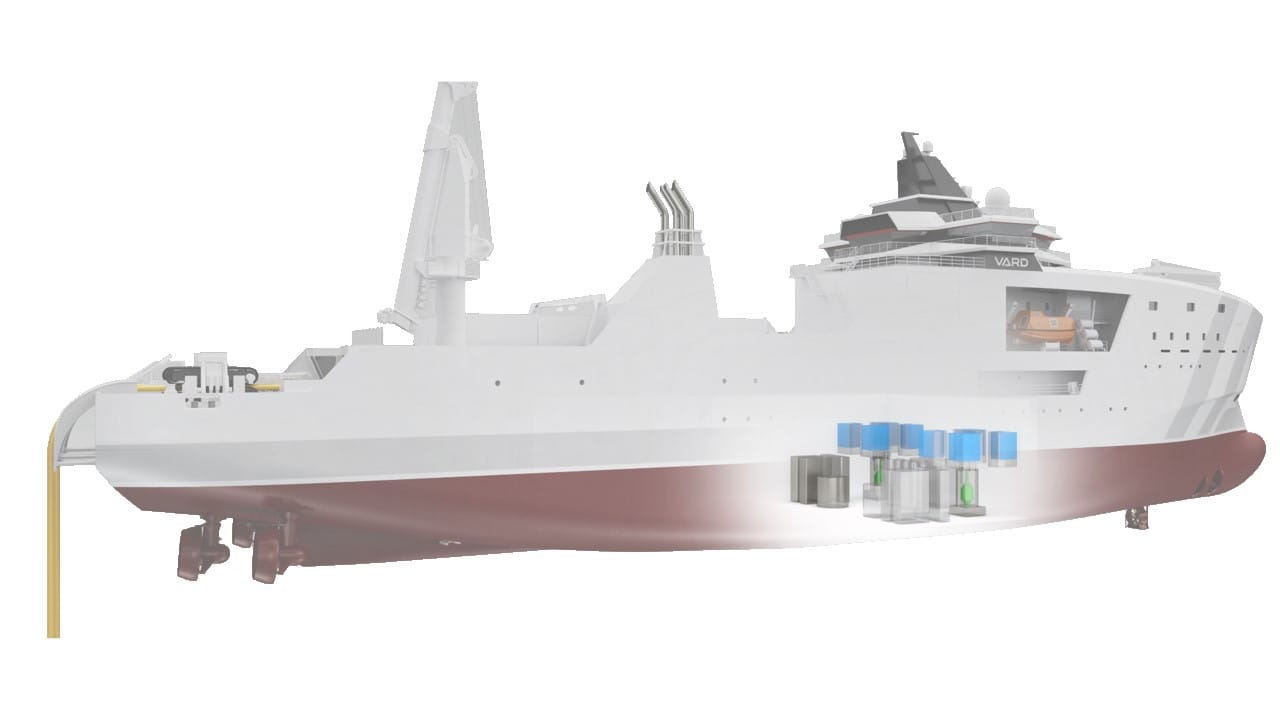
Nuclear-powered shipping: a golden future or overhyped promise?
ADVERTISEMENT

The idea of nuclear-powered shipping is gaining renewed attention as engineers and policymakers explore whether fourth-generation reactors could offer a path to decarbonising maritime transport. At a recent meeting on Nuclear Power for Shipping at the Technical University of Norway (NTNU), optimism was high among proponents of the technology, particularly around small modular reactors (SMRs), with discussions often framing political oversight as a barrier rather than a safeguard. 


Jan Emblemsvåg, professor and organiser of the event, argued that engineering progress could be slowed by political interference, reflecting a broader sentiment among some participants that technical development should remain largely insulated from policymaking. The overall tone of the conference leaned strongly toward confidence in nuclear propulsion for ships, with limited discussion of constraints beyond safety acknowledgements. 

ADVERTISEMENT


However, this optimism is sharply contested by nuclear safety specialists who argue that many of the core claims behind SMR technology remain unproven — especially in a maritime environment. 


Claims versus technical reality 


Dr Edwin Lyman, Director of Nuclear Power Safety at the Union of Concerned Scientists, challenges the narrative that SMRs represent a breakthrough for safe, economical and scalable nuclear power. His April 2024 paper, “Five Things the ‘Nuclear Bros’ Don’t Want You to Know About Small Modular Reactors,” directly addresses the claims frequently made in favour of SMRs: lower cost, higher safety, reduced waste, improved reliability, and greater efficiency. 


According to Lyman, none of these claims have been demonstrated in practice. He argues that while SMRs are smaller, this does not automatically translate into lower costs per kilowatt-hour once capital expenditure, maintenance, fuel and operational costs are included. He also cites a University of Cambridge engineering study suggesting that cost reductions from mass production would likely not exceed 30%, far below the 80% reductions sometimes claimed by proponents. 


Safety concerns amplified at sea 


A central argument for SMRs is that their smaller size and reduced heat output make them inherently safer. Lyman disputes this, noting that passive safety systems may fail under extreme environmental conditions such as earthquakes, flooding or wildfires. 


In a maritime context, he argues, these risks are amplified rather than reduced. “I would not be comfortable with deploying SMRs on ships,” he said, highlighting unresolved challenges in fluid dynamics, heat transfer and system stability in a moving marine environment. He stressed that none of these reactors have been tested either on land or at sea. 


More concerning still, certain reactor types such as molten salt reactors could generate tritium, a radioactive isotope of hydrogen, which could disperse beyond containment systems and pose risks to crew and cargo. Early experimental solutions, such as charcoal absorption systems, were eventually abandoned, with contaminated materials requiring nuclear waste disposal. 


The unresolved issue of nuclear waste 


Waste management remains one of the most controversial aspects of nuclear energy deployment at sea. While conference discussions at NTNU reportedly downplayed disposal costs as minimal, Lyman argues the issue is far from resolved. 


He points out that radioactive waste management has remained an unsolved global challenge for decades, despite repeated promises from the nuclear industry. Finland’s Onkalo repository remains the only advanced example of long-term geological storage, designed to contain 6,500 tonnes of spent fuel at depths of 400–450 metres, with permanent sealing planned after 100 years. No comparable systems exist elsewhere. 


For shipping applications, Lyman warns that no credible waste management framework currently exists. Any company deploying nuclear-powered vessels would require a fully developed, licensed long-term disposal programme — something he considers unrealistic under current conditions. He also notes that certain fuels, such as TRISO, could produce up to ten times more waste than conventional reactors. 


Even interim storage solutions, such as cooling spent fuel in water pools before dry storage, involve decades of monitoring and long-term financial liability, often ultimately transferred to governments and taxpayers. 


Regulatory gaps and Untested technologies Apart from safety and waste, a key barrier is the lack of a regulatory framework for shipboard SMRs. Lyman points out that no modern SMR design has ever been fully constructed and tested under real operating conditions, and that existing programmes are still confined to experimental settings rather than operating power systems. 


But he also warns that the push to accelerate development schedules might compromise engineering integrity, especially for complex systems such as thermal hydraulics and power conversion. “You go down that path, you increase the risk of failure, you don’t decrease it,” he says. 


Another complication is the fuel supply. High-assay low-enriched uranium (HALEU), required for many SMR designs, demands more intensive uranium mining processes, which themselves carry environmental and human health impacts. Historical data cited in the discussion indicates thousands of uranium miners have suffered fatal occupational diseases linked to radiation exposure. 


A technology still searching for a pathway 


Despite industry enthusiasm and political interest in decarbonisation solutions for shipping, Lyman argues that there is currently no viable pathway to deploy SMRs safely in an international maritime context. He highlights the absence of both technical validation and global regulatory consensus, particularly regarding safety, security and non-proliferation controls. 


Existing SMR developers, he notes, are under pressure to secure funding in a competitive market, which may encourage overly optimistic claims about readiness and performance. In his view, this competition risks amplifying expectations that are not grounded in operational reality. 


Contrary to arguments that political interference is holding back progress, Lyman suggests the opposite: that large-scale government involvement and strict regulatory frameworks are essential prerequisites for any credible nuclear maritime future. 


The debate over nuclear-powered shipping remains sharply divided. Supporters see SMRs as a possible foundation for maritime decarbonisation, but opponents argue that the fundamental issues of cost, safety, waste management and regulation are not yet solved. 


For the time being, nuclear propulsion at sea remains squarely in the realm of technological aspiration versus practical doubt, a notion that continues to attract interest but has not yet gained the proven foundations needed to support commercial application. 

Previous Post

Shanghai opens Changxing Ocean Lab to drive marine engineering innovation

Next Post

Flotilla of Iranian tankers headed toward Asia as sanctions waiver reshapes oil flows

Next Post
Flotilla of Iranian tankers headed toward Asia as sanctions waiver reshapes oil flows

Flotilla of Iranian tankers headed toward Asia as sanctions waiver reshapes oil flows

Leave a Reply Cancel reply

Your email address will not be published. Required fields are marked *

A D V E R T I S E M E N T

Popular News

  • Drone Delivery Takes Flight: Amazon Partners with UPS for Trial Program

    Drone Delivery Takes Flight: Amazon Partners with UPS for Trial Program

    0 shares
    Share 0 Tweet 0
  • Rail Cargo Group Strengthens European Network with Captrain Netherlands Acquisition

    0 shares
    Share 0 Tweet 0
  • Automotive Inbound Logistics Market: Navigating Future Challenges

    0 shares
    Share 0 Tweet 0
  • Global Inflation Cools to Target After Three Years, Central Banks Face Policy Dilemma

    0 shares
    Share 0 Tweet 0
  • Dubai Mercantile Exchange Rebrands as Gulf Mercantile Exchange Following Saudi Tadawul Group Acquisition

    0 shares
    Share 0 Tweet 0

Recent News

Flotilla of Iranian tankers headed toward Asia as sanctions waiver reshapes oil flows

Flotilla of Iranian tankers headed toward Asia as sanctions waiver reshapes oil flows

June 23, 2026
Nuclear-powered shipping: a golden future or overhyped promise?

Nuclear-powered shipping: a golden future or overhyped promise?

June 23, 2026
Shanghai opens Changxing Ocean Lab to drive marine engineering innovation

Shanghai opens Changxing Ocean Lab to drive marine engineering innovation

June 23, 2026

Discover a new era of logistics reporting with The Logistic News, your go-to platform for breaking news, insightful features, and exclusive interviews shaping the global logistics and freight landscape. Trust us to deliver accurate, timely, and relevant information that empowers professionals and enthusiasts alike in navigating the intricacies of this vital sector.

Navigation

  • Home
  • About Us
  • Press Room
  • Podcasts
  • Media Kit
  • Contact Us
  • Careers
  • Privacy Policy
  • Terms of Use

© 2024 - thelogisticnews.com

Welcome Back!

Login to your account below

Forgotten Password? Sign Up

Create New Account!

Fill the forms below to register

All fields are required. Log In

Retrieve your password

Please enter your username or email address to reset your password.

Log In

SIgn Up Newsletter

This will close in 20 seconds

Manage Cookie Consent
We use technologies like cookies to store and/or access device information. We do this to improve browsing experience and to show (non-) personalized ads. Consenting to these technologies will allow us to process data such as browsing behavior or unique IDs on this site. Not consenting or withdrawing consent, may adversely affect certain features and functions.
Functional Always active
The technical storage or access is strictly necessary for the legitimate purpose of enabling the use of a specific service explicitly requested by the subscriber or user, or for the sole purpose of carrying out the transmission of a communication over an electronic communications network.
Preferences
The technical storage or access is necessary for the legitimate purpose of storing preferences that are not requested by the subscriber or user.
Statistics
The technical storage or access that is used exclusively for statistical purposes. The technical storage or access that is used exclusively for anonymous statistical purposes. Without a subpoena, voluntary compliance on the part of your Internet Service Provider, or additional records from a third party, information stored or retrieved for this purpose alone cannot usually be used to identify you.
Marketing
The technical storage or access is required to create user profiles to send advertising, or to track the user on a website or across several websites for similar marketing purposes.
Manage options Manage services Manage {vendor_count} vendors Read more about these purposes
View preferences
{title} {title} {title}
No Result
View All Result
  • Logistic
  • Air
  • Maritime
  • Land
  • World
  • Business
  • Tech
  • Events
  • Advertise

© 2024 - thelogisticnews.com