



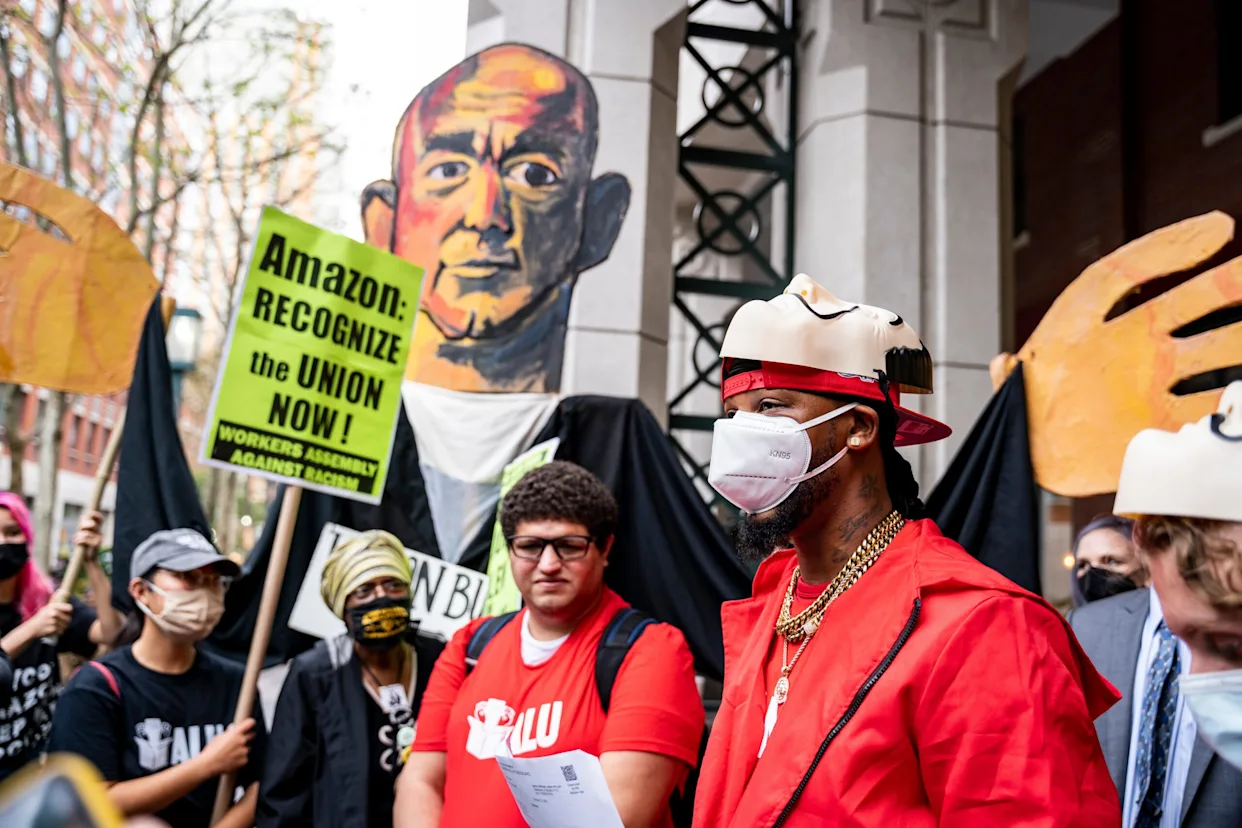
The Teamsters union is pushing back against a proposed settlement between Amazon and the National Labor Relations Board (NLRB), arguing it could derail a case with potentially far-reaching consequences for labor rights in last-mile delivery.
At the heart of the dispute is whether Amazon should be considered a joint employer alongside its Delivery Service Partners (DSPs) — the independent contractors responsible for delivering packages across the United States. While drivers often wear Amazon uniforms and operate branded vehicles, they are formally employed by DSPs, not Amazon itself.
The case originated in Los Angeles and had been progressing in a way that supported the Teamsters’ position. Early findings suggested Amazon could indeed be classified as a joint employer — a determination that would significantly reshape the company’s labor model and legal responsibilities.
However, a newly surfaced agreement between Amazon and the NLRB’s General Counsel threatens to halt the process. The Teamsters described the deal as an “ambush settlement”, stating it was introduced abruptly in April without transparency on its full terms.
According to reports, the agreement would provide approximately two weeks’ pay to around 80 workers from a DSP known as Battle Tested Strategies (BTS), without Amazon admitting wrongdoing or being formally recognized as a joint employer.
BTS had previously become the only known DSP to recognize the Teamsters following a successful organizing effort. Shortly afterward, it lost its contract with Amazon — a move the company says was unrelated.
If the settlement is finalized, the earlier NLRB findings supporting joint employer status would likely carry no lasting legal impact, effectively closing the case before a definitive ruling.
In parallel, the Teamsters secured a more limited victory in a separate legal matter involving Cemex Construction Materials Pacific. A federal appeals court upheld an NLRB decision requiring Cemex to negotiate with the union based on “card check” recognition, where a majority of workers signed union support cards.
However, that win may prove short-lived. A separate ruling from another court recently challenged the broader legal framework behind such decisions, creating uncertainty and potentially setting the stage for a future Supreme Court showdown.