



The Ksi Lisims LNG project planned for the northern coast of British Columbia has attracted renewed international interest, with German utility Uniper becoming the second European buyer to signal potential long-term offtake, as project partners move closer to a final investment decision.
Duesseldorf-based Uniper and Ksi Lisims LNG have signed a letter of interest that could see the utility purchase up to two million tonnes of LNG per year, with deliveries potentially starting in 2032. The agreement outlines key commercial terms that would form the basis of a more formal supply and purchase contract.
Uniper operates across key European markets, including Germany, the United Kingdom, Sweden and the Netherlands, and is one of the region’s major LNG importers. The company holds around 18.5 gigawatts of power generation capacity. It was placed under German government control during the 2022 energy crisis following Russia’s invasion of Ukraine, although a privatization process is now underway.
According to Uniper chief executive Michael Lewis, diversifying the company’s LNG supply base remains a strategic priority.
“Canada offers an attractive environment with significant gas resources, strong political stability and reliable regulatory frameworks,” Lewis said.
“We see potential in projects like Ksi Lisims LNG to further enhance the resilience and flexibility of our supply portfolio.”
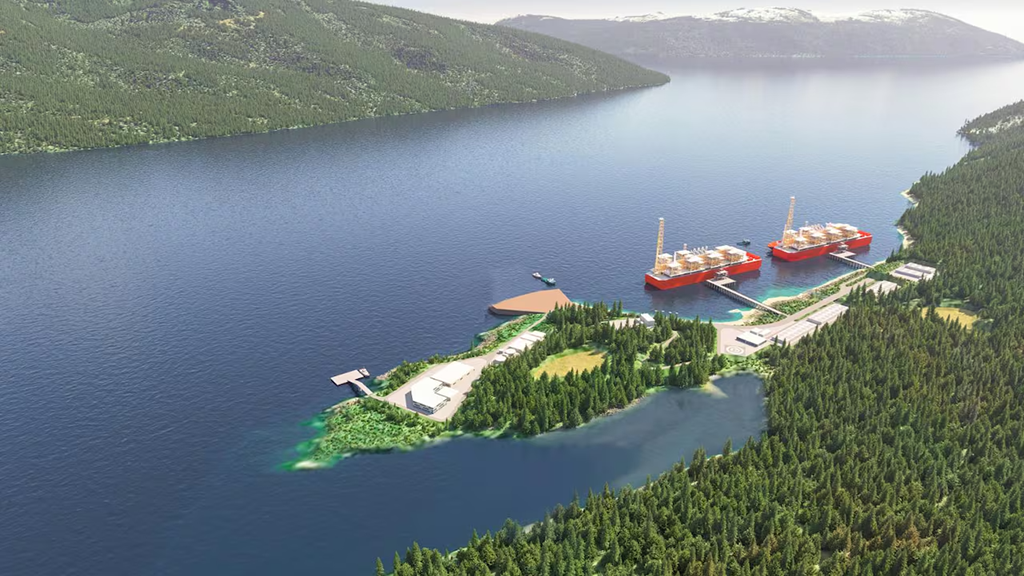
The Ksi Lisims project is being developed by Houston-based Western LNG, working alongside Rockies LNG, a consortium of Canadian natural gas producers, and the Nisga’a Nation, on whose traditional territory the facility would be located. The proposed floating LNG plant is designed to export up to 12 million tonnes per year from Pearse Island, near the Alaska border.
The project, estimated at around $10 billion, has already secured regulatory approval but has yet to reach a final investment decision. Securing long-term supply commitments such as the one being discussed with Uniper is considered a critical step toward moving the development forward.
Western LNG chief executive Davis Thames said the growing interest from Europe highlights the broader strategic relevance of the project.
“This project, and Europe’s interest in it, demonstrates how energy security, climate responsibility, and community-focused economic development can be achieved together,” Thames said.
Late last month, another German state-linked energy company, Securing Energy for Europe (SEFE), signed a long-term agreement to purchase one million tonnes of LNG per year from Ksi Lisims over a period of up to 20 years, underscoring the growing European appetite for alternative gas supply sources.
Europe’s increasing interest in Canadian LNG reflects a broader shift in global energy flows following Russia’s invasion of Ukraine in 2022, which significantly reduced reliance on Russian gas. More recently, geopolitical tensions and disruptions in the Middle East, including halted LNG shipments linked to the U.S.-Israel conflict with Iran since late February, have further tightened global supply options.
While Canada is geographically distant from Europe, cargo routes from Ksi Lisims could reach Germany via the Panama Canal for smaller vessels, or alternatively take longer routes around South America or Africa. However, Canada’s federal natural resources minister Tim Hodgson has suggested that cargo swap arrangements are more likely, where LNG volumes are exchanged between companies positioned closer to end markets.
Despite growing commercial interest, the project continues to face uncertainty. Energy analyst Alex Walker, program manager at Environmental Defence, said the latest agreement should be viewed as much as a political signal as a commercial milestone.
“For Ottawa, this signals further momentum of the nation building agenda. For Germany, it helps prove the value of the state-owned Uniper ahead of its sale, reassuring prospective buyers such as the Canada Pension Plan that the company holds long-term supply commitments,” Walker said.
Reuters has reported that the Canada Pension Plan Investment Board is among potential bidders for Uniper.
Walker also cautioned that the project remains subject to ongoing legal and political challenges, including opposition from First Nations and disputes over the associated pipeline infrastructure.
“Despite what the headlines say, this project is far from a Canadian nation building project waiting to happen,” he added.
As European utilities continue to secure long-term LNG supplies, the Ksi Lisims project remains at the intersection of energy security ambitions, geopolitical realignment, and domestic environmental debate in Canada.
- Latest
- Trending
ADVERTISEMENT