



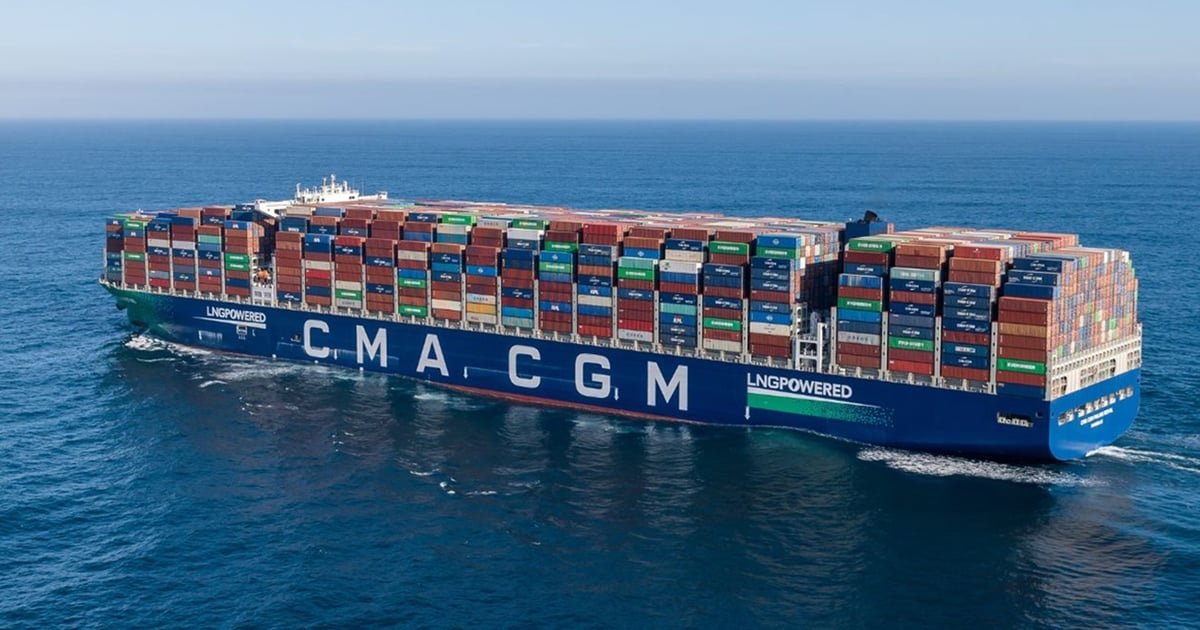
CMA CGM appears to be gradually increasing its use of the Red Sea and Suez Canal route, becoming the first major global carrier to test a broader return to the shorter Asia-Europe corridor while much of the industry remains cautious.
Since the conflict in Gaza began in autumn 2023, threats linked to the Houthi movement in the Bab al-Mandeb Strait had forced many operators to divert vessels around the Cape of Good Hope, adding thousands of extra miles to voyages between Asia and Europe.
There had been some expectation that operators might return to the Red Sea once fighting in Gaza eased. However, the conflict later widening into the Arabian Gulf largely undermined that outlook.
Despite that environment, Lars Jensen, chief executive of consultancy Vespucci Maritime, noted that CMA CGM has been quietly moving back toward Suez transits.
He pointed to the 8,500 teu CMA CGM Tosca, currently sailing from Asia to Europe on the new Ocean Rise Express, as an example, saying the vessel is being routed via Suez and is listed that way in the carrier’s schedules.
According to Alphaliner, the line is effectively “testing the water” for a broader return to the route. If successful, the move could potentially give CMA CGM a significant competitive advantage at a time when other major carriers are still unwilling to assume the risk.
CMA CGM has already maintained four services through the region, a situation some have linked to the carrier’s Lebanese connection, which may have been perceived as offering a degree of operational comfort.
In addition to those services, the Ocean Alliance’s MEX service between Asia and the Mediterranean is also being rerouted. The 16,020 teu CMA CGM Jules Verne completed an eastbound Suez transit earlier this month, while the similarly sized CMA CGM Marco Polo is due to head westbound through the canal this week.
The newly delivered 23,872 teu CMA CGM Grand Pal, currently on its maiden voyage, is also expected to take the shorter route.
Jensen noted that no other major global carrier has reverted to Suez routing at this stage, although niche operators have continued to cross Bab al-Mandeb regularly and in some cases have been using Suez on and off over the past two years.